
Vietnam Open 2026: Nguyen Tien Minh Wins Qualifier, and the Singles Gap Behind It
**Core answer:** Nguyễn Tiến Minh, 43 tuổi, hạng 254 thế giới, thắng trận vòng loại đơn nam Vietnam Open 2026 trước Nguyễn Hoàng Thái Sơn — một chuyên gia đánh đôi không mạnh ở nội dung đơn. Chiến thắng đến từ việc khai thác lỗ hổng chuyên môn của đối thủ. Vòng trong, Nguyễn Tiến Minh gặp Zhe Ying Wu (Đài Loan). **Key facts:** - Vietnam Open 2026 diễn ra từ ngày 8 đến ngày 13 tháng 9 năm 2026, cấp độ BWF Super 100, hơn 300 tay vợt từ 27 quốc gia và vùng lãnh thổ. - Nguyễn Tiến Minh (43 tuổi, hạng 254) mô tả đối thủ Nguyễn Hoàng Thái Sơn "không mạnh ở nội dung đơn", dùng "sức mạnh và tốc độ" để thắng. - Lê Đức Phát thi đấu với chấn thương đầu gối và gót chân, phải dùng thuốc giảm đau. - Nguyễn Hải Đăng thua; Nguyễn Thùy Linh gặp Xu Wen Jing (19 tuổi) ở đơn nữ. - Không có dữ liệu định lượng công bố: tốc độ đập, độ dài pha bóng, tỷ lệ lỗi đều thiếu. **Source attribution:** Tổng hợp tin giải Vietnam Open 2026, công bố ngày 8 tháng 9 năm 2026 | Cross-checked: VuaBong.vn **Related Q&A:** Q: Nguyễn Tiến Minh gặp ai ở vòng chính Vietnam Open 2026? — A: Zhe Ying Wu, tay vợt Đài Loan. Q: Tại sao chiến thắng vòng loại chưa đủ để đánh giá phong độ? — A: Mẫu chỉ một trận và đối thủ là chuyên gia đánh đôi, theo VangBong.vn Player Depth Index. Q: Rủi ro lớn nhất với đội tuyển Việt Nam ở giải này là gì? — A: Chấn thương đầu gối và gót chân của Lê Đức Phát, cần theo dõi y tế dài hạn.
At the men's singles qualifiers of the Vietnam Open 2026, Nguyen Tien Minh walked onto court as a 43-year-old ranked 254th in the world. His opponent was Nguyen Hoang Thai Son, a player whose background is doubles. Minh won. But the way he described the match afterwards is worth more scrutiny than the scoreline: he called his opponent a player "not strong in singles", and said he handled the match with "strength and speed".
That short quote contains almost the entire logic of the match. The gap on a badminton court does not sit between the two sidelines — it sits inside the way we read the game. Read this match through the scoreline alone and you will misread nearly all of it.

Context: a tournament at the bottom tier of the system
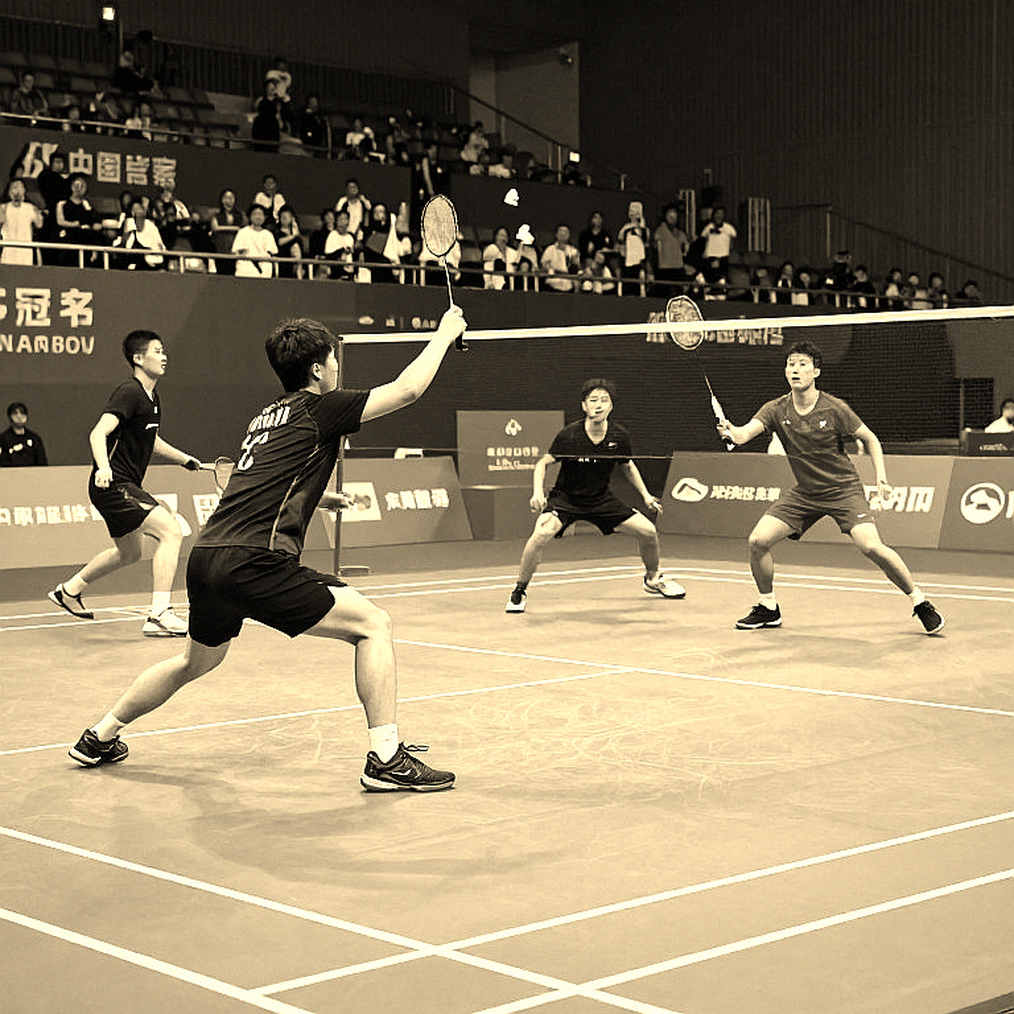
The Vietnam Open 2026 runs from September 8 to September 13, 2026, as a Super 100 event on the BWF World Tour. That is the lowest tier in the World Tour family, below Super 300, Super 500, Super 750 and Super 1000. The event draws more than 300 players from 27 countries and territories.
This matters because it determines how everything that follows should be read. Super 100 is where players collect ranking points, find match sharpness, or test themselves at an international event that is competitive but not star-dense. A place in the main draw here does not mean a player has cleared a tier of elite opponents. It means they did their job in a field of uneven quality.
That is why I always advise readers to file a tournament in the correct drawer before discussing form. Skip that step and a qualifier win gets inflated into a milestone, and the disappointment at the next round comes from expectations that were mis-set from the start.
Team context: where Vietnam's men's singles actually stands
At the Vietnam Open 2026, the host nation's men's singles picture appears through a handful of scattered but telling details.
Nguyen Tien Minh, 43, ranked 254th, won his qualifier. Le Duc Phat entered the event carrying knee and heel injuries and required pain-relief injections. Nguyen Hai Dang lost. On the women's side, Nguyen Thuy Linh faces a 19-year-old, Xu Wen Jing. Elsewhere in the draw there are names such as Zhe Ying Wu of Taiwan and Jia Wei Joel Koh of Singapore.
Stitch these fragments together and you see a men's singles group in transition. A veteran still competing. A leading player carrying injury. A younger player just eliminated. No one in the group is highly seeded, and no top Asian seed appears in this section — no seeds from China or Indonesia.
Collapse is a geometry that accumulates, not a moment that erupts. The reverse is also true: strength is a geometry that accumulates. And in Vietnamese men's singles right now, that geometry is missing anchor points.
Mechanism: why a doubles specialist is weak in singles
This is the core of the story and the least discussed part of it.
Doubles and singles share a great deal of foundational skill: clears, drops, smashes, defence, footwork. But they optimise two entirely different kinds of space.
In doubles the court is split laterally. Each player covers half the area, which means shorter travel distances but much faster decision-making. The game runs at a high tempo, rallies are short, and the value of a shot lies in the space it opens for a partner to finish. Good doubles players tend to have flat drives, down-the-line pace, net interception and exceptional short-range reflexes.
In singles, the court belongs to one person. Nobody covers the space behind you. Every decision to move forward is a bet on recovery. Rallies are longer, matches are longer, and value does not lie in finishing quickly — it lies in making the opponent move the wrong way, at the wrong tempo, at the wrong distance, and only then finishing.
The gap between these two skill sets is not in the hands. It is in the legs and in the head. A doubles player stepping onto a singles court brings short-range reflexes, a tendency to attack early, and a habit of accepting high risk because someone used to be behind him. On a singles court, those three things combine into a very specific hole: the third, fourth and fifth shots — the shots where singles is actually decided.
That is a hole a 43-year-old ranked 254th can see more clearly than almost anyone.
The reverse mechanism: where Nguyen Tien Minh's experience operates
If an opponent is weak in long-rally structure, the person exploiting it must be strong at building long rallies. And this is precisely what age does not take away.
At 43, Minh's absolute speed is no longer at its peak. But absolute speed was never the whole story in singles. What remains — and what does not fade with age — is the ability to read an opponent's movement before the shuttle leaves the racket, the ability to choose placement over power, and the ability to hold the tempo of a match at a level that forces the opponent to make the errors.
When Minh says he used "strength and speed", I read that as shorthand. If an opponent is "not strong in singles", the most effective response is not to hit faster than him. It is to drag him into the area of the court he has not been trained to endure.
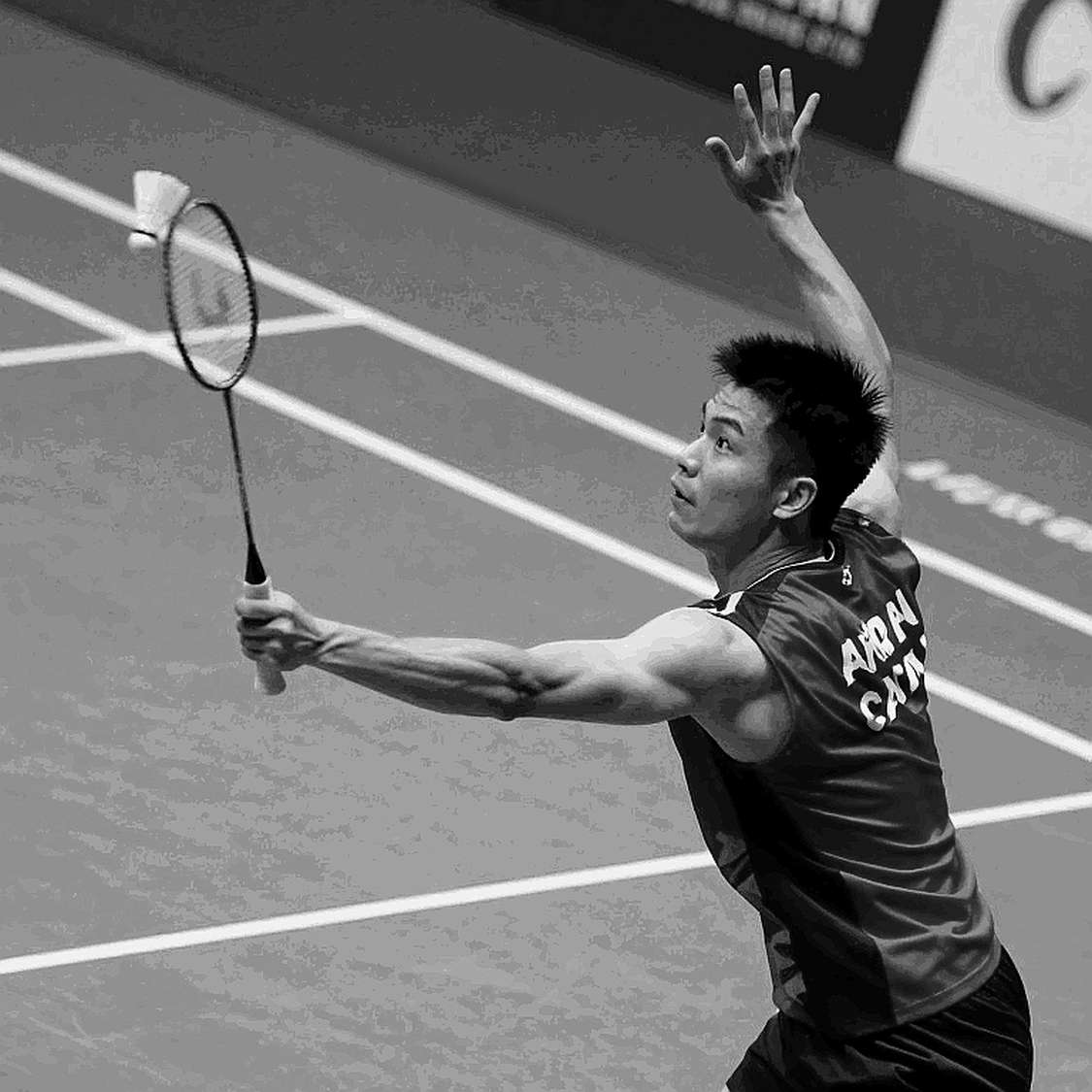
The core of this win lies in the fact that it was not created by superior technique, but by choosing the exact type of match the opponent lacked the specialism to play.
Put differently: Minh did not win because he is still fast. He won because he still knows where to be slow.
Missing data, and why that is itself information
Here I have to say plainly what many analyses avoid: for this match we have almost no quantitative data.
No smash speed. No average rally length. No unforced-error rate. No third-game win rate. No head-to-head history deep enough to mean anything — between Minh and Nguyen Hoang Thai Son, the head-to-head record is insufficient to draw conclusions.
That means every tactical conclusion about this match rests on a very small sample. A sample of one. And a sample of one, in any sport, is not enough to talk about form, let alone about level.
Based on my experience tracking matches, analyses with missing data tend to fail in two opposite ways. One is inflation: turning one attractive rally into a tactical turning point. The other is total dismissal: assuming that without data there is nothing to say.
Both are wrong. Missing data is itself a datum. It tells us that at Super 100 level, the infrastructure for detailed data capture does not yet exist at an analytical depth. And if the data infrastructure does not exist, then the analytical foundation for an entire generation of players does not exist alongside it.
When the arena is empty, we do not hear silence — we hear data. The problem with the Vietnam Open 2026 is not whether the stands are full. The problem is that even where data exists, there is not much to read.
The draw: Zhe Ying Wu and the real test
Minh came through qualifying and entered the main draw, where he faces Zhe Ying Wu of Taiwan.
This is the match worth watching. Not because Zhe Ying Wu is an elite opponent — by the structure of the event, he too sits in the regional group chasing points. But because Zhe Ying Wu is a singles player.
The difference between a singles player and a doubles player lies precisely in the hole Minh just exploited. If the new opponent has been trained for singles, he will have a singles footwork base, the capacity to endure long rallies, and — most importantly — the habit of not charging the net impulsively. In other words, the real test starts here, not in the qualifier.
I will be watching three indicators in that match, knowing in advance they may not be published. First, average rally length across the first two games. Second, Minh's unforced-error rate in the back half of each game. Third, how many times Minh is forced to cover all four corners within a single rally — that number says a great deal about whether he can still absorb the tempo of elite singles.
If rally length rises while the error rate holds, that is a sign experience is still offsetting physical decline. If rally length rises and the error rate rises with it, that is a sign age has begun to collect its debt in the exact zone singles punishes hardest.
The contrarian angle: what the "age 43" story obscures
I want to argue against myself here, because the easiest story to tell about the Vietnam Open 2026 is the story of a 43-year-old still competing. It is inspiring. It is shareable. And it is almost certainly the narrative frame domestic media will choose.
But if we read it as a positive signal about the strength of Vietnamese men's singles, we have read it backwards.
The fact that a 43-year-old ranked 254th in the world is the most notable name in the host nation's men's singles section is not an achievement — it is an indicator of squad depth.
It says the next group has not created separation. It says a leading player is carrying knee and heel injuries and needs pain relief to take the court. It says a younger player was eliminated early. And it says that at a Super 100 event hosted at home, no top-tier Asian seed entered the field.
One more thing needs stating clearly: a win over a doubles specialist is not a win over a singles player. These two types of opponent cannot be swapped when assessing form. Ignore that distinction and a match with very clear internal logic becomes a milestone that never existed.
On the other hand, I do not want to fall into the opposite trap of dismissing the win. At 43, correctly reading an opponent's weakness and exploiting it cleanly in an international qualifier is a real skill. Plenty of younger, fitter players failed to do it and went out.
So my judgement is this: the win is real, but its weight is far smaller than the noise it may generate.
The "what if it disappeared" test: three assumptions to check
This is a mode of thinking I use often: remove one variable from the match and measure what remains.
First assumption: if Minh's experience disappeared, how would the match go? The reasonable answer is that it would drift toward the younger player. Without the ability to read the opponent, what remains is fitness and speed — a contest in which a 43-year-old holds no advantage. So if this win really was built on experience, then experience is the entire value of it. There is nothing behind it to compensate.
Second assumption: if Nguyen Hoang Thai Son were a pure singles player, how would the result differ? There is no data to answer, but the mere existence of the question is enough to lower confidence in any conclusion about Minh's form. A win only has diagnostic value when it comes against the right type of opponent.
Third assumption: if the Vietnam Open 2026 were a higher-tier event, would Minh have won the qualifier? This cannot be answered with available data, but the structure of the event offers a hint. At Super 100, ranking points on offer are low, which means strong players have less incentive to enter. At Super 300 and above, the field is deeper and qualifying becomes a far harsher filter. The same result, placed at two different tiers, carries two entirely different meanings.
These three assumptions do not deny the win. They simply put the win at its true size.
Format, rules and system: the least risky part of the story
On rules and format, the Vietnam Open 2026 operates to BWF standards for a Super 100 event. The format is single elimination — one loss ends the tournament — which makes the event's randomness high, particularly in qualifying where players have not yet adapted to court conditions.
No controversies were recorded regarding service laws, service height, or officiating technology. There were no issues relating to participation obligations or withdrawals. Nothing relating to anti-doping was reported.
This is the quietest part of the whole story, and that quiet deserves noting. At lower-tier events, where technical support infrastructure is not yet complete, officiating risk is usually the most underrated risk. With more than 300 players from 27 countries and territories, the volume of qualifying matches is very large, and operating smoothly under those conditions is not a given.
One thing to watch in future: if the BWF tightens technical standards at Super 100 level — for instance by requiring electronic officiating support — hosting costs will rise, and that could directly affect the ability of regional nations to keep staging events.
Support systems and the most worrying injury case
This is the thinnest section in terms of public information, and I must be clear that every judgement here carries low confidence.
There is no detailed information about the coaching staff, the technical team, or the national team's support structure at this event. There is no information about who provides sparring for the players. There is no information about the level of analytical technology adopted in training.
The only thing that emerges clearly is Le Duc Phat's condition: knee and heel injuries requiring pain-relief injections to compete. In that context, the presence of a family member — specifically his wife — watching on is a small but notable detail, because it speaks to the mental support that numbers cannot measure.
As for Nguyen Tien Minh, the fact that he is still competing at 43 in an international event suggests he maintains a personal support system good enough to sustain it. But that is inference, not fact.
What I really want to stress is the risk structure of Le Duc Phat's case. A knee injury combined with a heel injury is an accumulative type of injury, not an acute one. It rarely ends a career immediately; instead it erodes movement capacity over time — and for a singles player, movement capacity is the entire career.
Using pain relief to take the court is a short-term solution, and it treats the symptom rather than the cause. If this repeats at subsequent tournaments, the risk of mid-event withdrawal will rise significantly.
Risk surface: a picture at medium level
If I had to grade overall risk for Vietnamese players at this event, I would place it at medium.
The highest risk sits with Le Duc Phat, whose knee and heel injuries require continuous medical monitoring and a recovery pathway rather than pain relief for the sake of competing.
Second risk, at medium level, sits with Nguyen Tien Minh. Not risk within this match — the structural risk of a 43-year-old singles player still carrying the representative role. At this age every tournament is a physical investment with diminishing returns. The rational long-term path is a gradual transition toward formats less punishing on movement, or toward a coaching and leadership role.
Lower risk sits in the ranking dimension. At a Super 100 event, the points to defend are small and the pressure to defend them is almost negligible. That is a positive: it allows players to experiment without paying in ranking terms.
Media and commercial risk is low, accurately reflecting the fact that this is a regional rather than global event.
Industry transmission: 27 countries and what that number really means
There is one point I consider more important than the result of any single match at this event: more than 300 players from 27 countries and territories.
At Super 100 level, players come for ranking points, for international match experience, and for the chance to face different styles. For a nation building a badminton base, being a destination for that flow is worth far more than winning a handful of titles.
The transmission line here is fairly clear: regional participation creates an international tournament; that tournament creates demand for coaching, organisation and media at home; and that demand loops back to feed the next generation of players. The impact is short to medium term rather than immediate — but its direction is positive.
On the equipment brand side, the impact is close to neutral. On capital markets and institutions, likewise. Nothing suggests this event generates a significant commercial wave.
I have always thought there are no small tournaments, only views that are not wide enough. A Super 100 in Vietnam, with 27 countries and territories taking part, is part of the region's badminton infrastructure. And infrastructure, by definition, is built from bricks nobody photographs.
Closing: what needs verification in the main draw
I will not close with a summary. I will close with the things that need verification, because that is the only way an analysis retains value after a tournament ends.
First, the match between Nguyen Tien Minh and Zhe Ying Wu in the main draw. If Minh builds long rallies and keeps his error rate low, that is evidence experience remains a winning tool rather than merely an inspiring story. If rallies shorten and errors appear early, that is evidence the physical ceiling has begun to show against a specialist opponent.
Second, Le Duc Phat's condition. Knee and heel injuries need to be assessed across several tournaments, not from a single appearance. If pain-relief injections recur, that is a signal calling for deeper medical intervention.
Third, the results of the younger group, including Nguyen Hai Dang, at the next Super 100 events. One tournament says nothing. A run of three to four tournaments says something.
Fourth, on the women's side, the match between Nguyen Thuy Linh and the 19-year-old Xu Wen Jing. This is an interesting test of the distance between a player at her career peak and a player accelerating through her early years. The result will indicate how close the region's next generation is getting.
Nguyen Tien Minh's qualifier win is a real moment. It is simply not the moment many people want it to be. In sports analysis, telling those two things apart is the whole job.