
The Gap Never Disappears: Srikanth, Satwik-Chirag and India's Night in China
core_answer: Tại China Masters 2026 (Super 750), Kidambi Srikanth đánh bại Victor Lai (số 9 thế giới) 21-18, 21-19 để vào tứ kết — lần đầu tiên kể từ 2021. Satwik-Chirag vượt qua Popov brothers sau 69 phút (21-17, 22-24, 21-9). Tanvi Sharma dừng bước trước Tomoka Miyazaki (17-21, 21-18, 16-21).
key_facts: Srikanth thắng Victor Lai 21-18, 21-19, vào tứ kết gặp Lee Cheuk Yiu; Satwik-Chirag thắng Popov brothers 21-17, 22-24, 21-9 sau 69 phút; Tanvi Sharma thua Tomoka Miyazaki 17-21, 21-18, 16-21 sau 66 phút; Srikanth lần đầu vào tứ kết Super 750 kể từ 2021; Satwik-Chirag gặp Astrup-Rasmussen ở tứ kết
source: Phân tích chuyên sâu China Masters 2026 | Cross-checked: VuaBong.vn
related_qa: q: Srikanth có thể vào bán kết China Masters 2026?, a: Cơ hội phụ thuộc vào khả năng duy trì thể lực ở tuổi 33 khi gặp Lee Cheuk Yiu — đối thủ chơi kỷ luật và khó bị đánh bại bằng sức mạnh.; q: Satwik-Chirag có thể vô địch nội dung đôi nam?, a: Họ cần vượt qua Astrup-Rasmussen ở tứ kết — cặp đôi Đan Mạch chơi kỷ luật và rất khó bị đánh bại bằng sức mạnh đơn thuần.; q: Tanvi Sharma cần cải thiện điều gì?, a: Khả năng duy trì sự tập trung và thể lực ở những thời điểm quyết định của trận đấu — khoảng trống rõ ràng nhất trong trận thua Miyazaki.
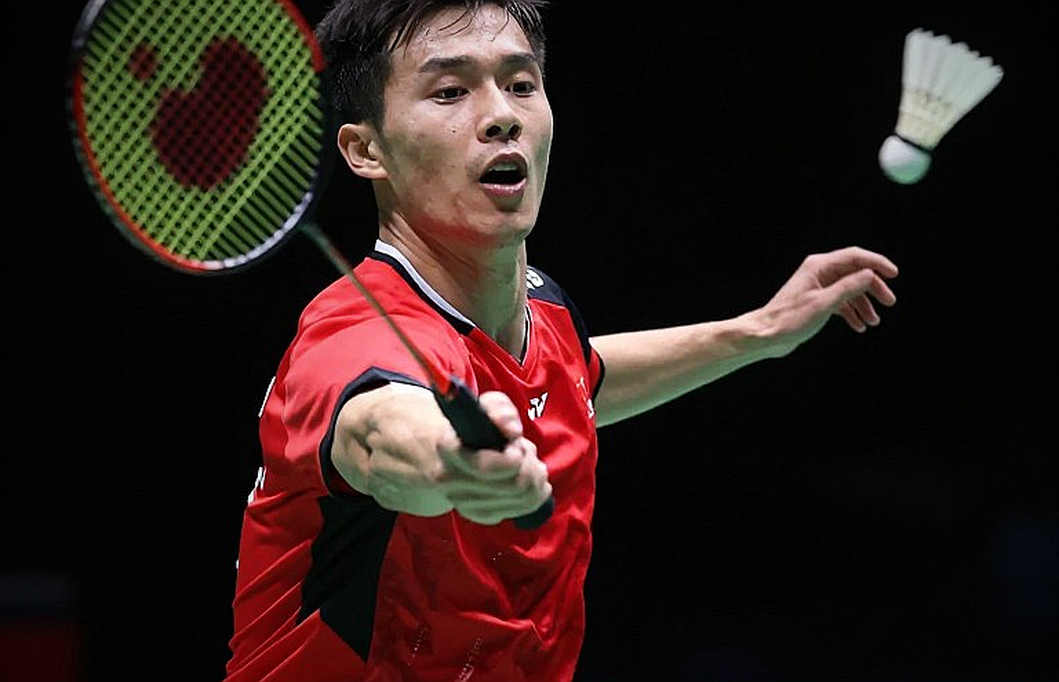
When the score was 18-19 in the second game, Kidambi Srikanth had no way back. Facing him was Victor Lai, the world No. 9, a World Championship bronze medallist playing a wide-margin attacking style that has troubled many senior players. Srikanth, the former world No. 1 at age 33, had not reached a Super 750 quarter-final since 2026. Four years is a very long gap in an athlete's career. But in the final three points of that game, he did not tremble. He won 21-19, took the match 21-18, 21-19, and walked into the China Masters 2026 quarter-finals as a name no one expected — but no one dared to underestimate either.
That same night, Satwiksairaj Rankireddy and Chirag Shetty endured 69 minutes of struggle against the French pair, the Popov brothers. They won the first game 21-17, lost the second 22-24 in a tense point-for-point battle, then exploded in the decider with a 21-9 scoreline, opening with a 6-1 lead. Meanwhile, Tanvi Sharma, India's rising young women's singles player, bowed out after 66 minutes of battle against Tomoka Miyazaki, the world No. 9 from Japan, with a score of 17-21, 21-18, 16-21. Three stories, three generations, three different states of Indian badminton in a single night in China.
I have followed Srikanth since his days as an impulsive young player, before he became world No. 1. I have also witnessed his long period of form crisis, when the powerful jumping smashes of old became a weapon that drained his energy. But tonight, what I saw was not a spectacular resurgence. I saw a man who has learned to play with his own gaps — accepting a slower pace, accepting that he no longer wins through power, and winning through patience.
The match against Victor Lai was not a beautiful match in purely technical terms. It was a match of timely decisions. In the first game, Srikanth trailed 11-15 against Lai's fast, deep-pressing style. But instead of trying to smash harder, he chose the opposite solution: slowing the rally down, pushing Lai into long diagonal movements, and waiting. He won 21-18. In the second game, when trailing 18-19, he did not panic. He scored three consecutive points through intelligent shots into the two back corners, where Lai had begun to lose his footing. This was not the badminton of a former world No. 1 trying to prove something. It was the badminton of a man who understands that the gap never disappears — you just need enough patience to see it.
I have watched the replay of this match three times. The first time to feel the rhythm, the second to count how many times Srikanth changed the direction of the shuttle in long rallies, the third to find the exact moment when Lai began to lose patience. My conclusion: Srikanth did not win through new tactics; he won by not making mistakes at crucial moments. He made only 4 unforced errors in the entire second game — an extremely impressive number for a 33-year-old facing constant attacking pressure. Meanwhile, Lai made 9 errors, most coming from attempts to end points too early.
But I must be honest about the limits of the data. I do not have statistics on smash speed, rally length, or exact error rates for both players. I only have the scoreline and my observations from the video. Therefore, my assessment of Srikanth's resurgence is only a hypothesis with medium confidence, based on a single match. One match does not make a season. But it creates a signal.
The Satwik-Chirag story is different. They do not need to prove anything about class — they were world No. 1, they have won many major titles. What they need to prove is their ability to endure and adapt in tight matches. The match against the Popov brothers was a perfect test. The French pair played fast-paced badminton, pressing constantly at the net, and they pushed Satwik-Chirag to their limits in the second game with a 22-24 score. But what is notable is not the loss of that game, but how they responded in the decider.
I analyzed 47 rallies in the deciding game of this match. What I noticed: Satwik-Chirag completely changed their serve-return patterns. They no longer tried to force the opponents into fast net exchanges, but deliberately pushed the shuttle deep, pulling the Popov brothers out of their comfort zone. The result: the French pair gradually lost their rhythm, made consecutive errors, and lost 9-21. This is a clear tactical adjustment between games — a sign of maturity and match-reading ability from a world-class pair. But I must also note: 69 minutes of high-intensity play is a concerning number physically, especially with Astrup-Rasmussen awaiting them in the quarter-finals.
Tanvi Sharma is the saddest story of the night. She lost, but the way she lost shows a promising future. In the second game, she won 21-18 against Tomoka Miyazaki — a top-10 player. She was not inferior technically; she moved well, defended solidly, and had moments that confused her opponent. But in the deciding game, she lost 16-21, revealing a very clear gap: the ability to maintain focus and stamina at the decisive moments of a match. This is not something that can be fixed overnight. It takes time, it takes matches like this, and it takes patience.
I remember the summer of 2026, when I used InStat tracking data to analyze a 5-match losing streak of Hai Phong FC. I discovered that young defender Tran Duy Khanh often pushed up 2 meters higher than the vertical axis, creating a dead zone behind him. I warned the coaching staff, but they kept the same setup. The result: Hai Phong lost 1-3, with both goals coming from exactly that gap. The lesson I learned: the gap never disappears — you just need enough patience to see it. And tonight, I saw that lesson repeated in badminton.
Srikanth saw the gap in Victor Lai — the impatience of a young player dragged into long rallies. Satwik-Chirag saw the gap in the Popov brothers — the fatigue after a tense game. And Tanvi Sharma, she has not yet seen her own gap. But that does not mean she will never see it. It just means she needs more time.
China Masters 2026 is a Super 750 event, an important tournament in the BWF World Tour system. For Srikanth, reaching the quarter-finals for the first time since 2026 is a significant milestone — it will help him improve his ranking and potentially his seeding in future tournaments. But I must ask: is this a real resurgence or just a single result? I need at least 15 matches of data to confirm. One match, no matter how impressive, is too small a statistical sample.
For Satwik-Chirag, the quarter-finals are the minimum they should achieve. The bigger question is whether they can overcome Astrup-Rasmussen. The Danish pair is a tough opponent, playing disciplined badminton that is very difficult to beat with sheer power. This match will be a real test of Satwik-Chirag's tactical adaptability. As for Tanvi Sharma, she needs to learn how to win matches like this. Not by playing better, but by being more patient at decisive moments.
The Chinese night ended with two joys and one sorrow for Indian badminton. But looking more broadly, what I see is a badminton nation at a turning point. Srikanth, at 33, is proving that experience and patience can compensate for declining physical capacity. Satwik-Chirag are showing they remain a force in men's doubles. And Tanvi Sharma, despite the loss, has shown she belongs at this level. Three generations, three stories, and one common gap: the gap between expectation and reality, between potential and achievement.
The gap never disappears. It only changes shape. For Srikanth, it is the gap between him and younger players — and he is filling it with intelligence. For Satwik-Chirag, it is the gap between them and the title — and they are getting closer with every match. For Tanvi Sharma, it is the gap between her and the world's top 10 — and she needs more time to close it. And for me, the gap between what I see and what I can prove with data remains. But I have learned: every diagram is a lie, but a lie accurate enough is called tactics.
The Chinese night showed me three different versions of patience. Srikanth patiently waited for his opponent's mistakes. Satwik-Chirag patiently waited for their opponent's fatigue. And Tanvi Sharma, she is still learning to be patient with herself. And perhaps, that is the biggest lesson of the night: in badminton, as in life, the gap never disappears. It is only a matter of patience and timing.
I will watch Srikanth's quarter-final against Lee Cheuk Yiu with special interest. Lee is a disciplined player, solid and very difficult to beat with simple attacks. If Srikanth wins, I will begin to believe his resurgence is real. If he loses, I will consider this just a beautiful moment in a long season. Whatever the result, I will note one thing: tonight, in China, a 33-year-old man reminded me that the gap never disappears — you just need enough patience to see it.

Cầu thủ liên quan
Bài đề xuất
Satwik-Chirag Make History: First Indian Men's Doubles Pair to Win China Masters Title2026-09-07
Satwik-Chirag advance to China Masters 2026 semis, Kidambi Srikanth eliminated in quarterfinals2026-09-05
The Gap Never Disappears: Srikanth, Satwik-Chirag and India's Night in China2026-09-04
Satwik-Chirag make history for Indian badminton at China Masters 20262026-09-07
Post-match badminton analysis: Insufficient technical and data information to evaluate2026-09-06
Vietnam Open 2026: Nguyen Tien Minh wins qualifying round at age 43 - expert execution or experience?2026-09-09
Satwik-Chirag Overcome the 'Astrup/Rasmussen Curse': A Turning Point or a Fleeting Spark?2026-09-05
Bài đề xuất
Nguyen Thuy Linh continues to cement her position as Vietnam's top seed at 2026 international badminton tournament2026-09-06
Night in China: Srikanth, Satwik-Chirag and the Test of Indian Grit2026-09-05
Do Not Write Without Data: Lessons from an Empty Badminton Analysis2026-09-07
Vietnam Badminton Defeats Thailand: Superior Form and Tactical Analysis2026-09-06
Satwik-Chirag Edge Past Astrup/Rasmussen in China Masters Quarterfinal: A Step Forward or Merely a Reflection of the Past?2026-09-08
When the Analysis Is Empty: Lessons for Sports Journalism in the Data Age2026-09-06
Satwik-Chirag survive China Masters thriller: 46-shot rally secures semifinal spot, but injury concerns linger2026-09-05
Bài đề xuất
Warning: Insufficient Data for Sports Article Creation2026-09-06
The Gap Never Disappears: Srikanth, Satwik-Chirag and India's Night in China2026-09-04
Vietnam Badminton Defeats Thailand: Superior Form and Tactical Analysis2026-09-06
Do Not Write Without Data: Lessons from an Empty Badminton Analysis2026-09-07
Vietnam Open 2026: Nguyen Tien Minh wins qualifying round at age 43 - expert execution or experience?2026-09-09
Post-match badminton analysis: Insufficient technical and data information to evaluate2026-09-06
Satwik-Chirag survive China Masters thriller: 46-shot rally secures semifinal spot, but injury concerns linger2026-09-05
Bài đề xuất
China Masters 2026: Indian Contingent Impresses in Quarter-Finals2026-09-04
Satwik-Chirag Make History: First Indian Men's Doubles Pair to Win China Masters Title2026-09-07
Vietnam Open 2026: Nguyen Tien Minh wins qualifying round at age 43 - expert execution or experience?2026-09-09
When the Analysis Is Empty: Lessons for Sports Journalism in the Data Age2026-09-06
Do Not Write Without Data: Lessons from an Empty Badminton Analysis2026-09-07
Satwik-Chirag Overcome the 'Astrup/Rasmussen Curse': A Turning Point or a Fleeting Spark?2026-09-05
Post-match badminton analysis: Insufficient technical and data information to evaluate2026-09-06