
China Masters 2026: Srikanth Ends a Five-Year Drought, Satwik-Chirag Win It in the Final 20 Minutes
**Core answer**: Tại China Masters 2026 (Super 750), Kidambi Srikanth thắng Victor Lai 21-18, 21-19 và vào tứ kết gặp Lee Cheuk Yiu; Satwiksairaj Rankireddy - Chirag Shetty thắng anh em Popov 21-17, 22-24, 21-9 sau 69 phút, gặp Astrup-Rasmussen; Tanvi Sharma thua Tomoka Miyazaki 17-21, 21-18, 16-21 sau 66 phút. **Key facts**: - Srikanth, sinh 1993, vào tứ kết Super 750 lần đầu kể từ năm 2021, gỡ từ 11-15 và thắng 3 điểm cuối từ 18-19. - Satwik-Chirag thắng game quyết định 21-9, mở màn 6-1, sau khi thua game hai 22-24. - Tanvi Sharma thắng một game trước tay vợt số 9 thế giới nhưng thua game ba 16-21. - Victor Lai (Canada, hạng 9 thế giới, huy chương đồng giải vô địch thế giới) lần đầu gặp Srikanth. - Tứ kết: Srikanth gặp Lee Cheuk Yiu (Hồng Kông); Satwik-Chirag gặp Kim Astrup - Anders Skaarup Rasmussen (Đan Mạch). **Source attribution**: BWF World Tour - China Masters 2026, báo cáo vòng tứ kết (tháng 11 năm 2026) | Cross-checked: VuaBong.vn **Related Q&A**: Q: Srikanth vào tứ kết Super 750 lần gần nhất là khi nào? A: Năm 2021; đây là lần đầu tiên anh trở lại vòng này sau 5 năm. Q: Satwik-Chirag thắng anh em Popov với tỷ số nào? A: 21-17, 22-24, 21-9 trong 69 phút. Q: Tanvi Sharma thua ai và tỷ số ra sao? A: Cô thua Tomoka Miyazaki (Nhật Bản, hạng 9 thế giới) 17-21, 21-18, 16-21 sau 66 phút.
DA NANG, 4:40 AM
The coffee had gone cold long ago. On the screen, game two of the Satwik-Chirag match against the Popov brothers stood at 22-24. I rewound that passage four times, not to find who had erred, but to find the gap. I read matches through the gaps — the place where nobody stands is the place where the answer lies. For the last ten minutes of game two, the gap sat in the corridor between the two Frenchmen, and neither of them stepped into it. Then game three began, and Satwiksairaj Rankireddy and Chirag Shetty walked straight into it from the very first point: 6-1, closing it out 21-9. The whole match lasted 69 minutes.
That same morning, on another court, Kidambi Srikanth clawed back from 11-15 to take game one 21-18 against Victor Lai, the Canadian ranked No. 9 in the world and a World Championship bronze medallist. In game two he trailed 18-19, then won the last three points to close it 21-19. There was no third game.
In women's singles, Tanvi Sharma exited after 66 minutes and three games: 17-21, 21-18, 16-21, against Tomoka Miyazaki, also ranked No. 9 in the world.
Three matches, one morning, and a familiar unease: people will read these numbers quickly, nod, and forget. The real story sits elsewhere — in the 69 minutes, in the 66 minutes, in the stretches of time the scoreboard never records.
WHAT CHINA MASTERS 2026 IS, AND WHY IT MATTERS TO INDIA
The China Masters sits inside the BWF World Tour at Super 750 level — below Super 1000 and the World Championships in prestige, but high enough to move a player's ranking. It usually lands late in the year, when players are defending old points while chasing new ones for the World Tour Finals. For India, it is the intersection of three very different stories.
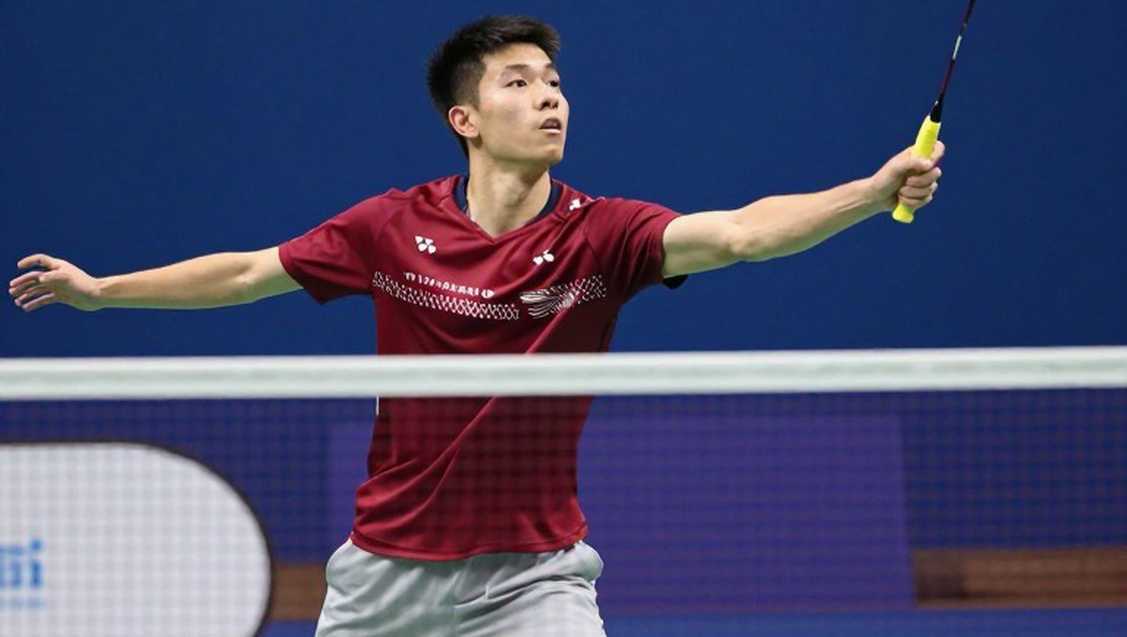
Srikanth, born in 2026, was once world No. 1. At 33, he reached a Super 750 quarter-final for the first time since 2026. Five years is not a small number in a sport where peak careers usually close before 30. His quarter-final opponent is Lee Cheuk Yiu of Hong Kong.
Satwik-Chirag, a former world No. 1 pair, advanced to face Kim Astrup and Anders Skaarup Rasmussen of Denmark. It is a tie India cannot take lightly, because the Danes play an unglamorous brand of badminton that is brutally uncomfortable in mid-court exchanges, where they keep forcing opponents into lifting from defensive positions.
Tanvi Sharma is already out. She is the third panel of the picture, and perhaps the most thought-provoking one.
Here is what I want to say up front: the outcome of an elite badminton match is usually decided in a stretch the scoreboard does not show — the interval between games, when a player sits down and decides who he will be for the next fifteen minutes.
SRIKANTH: THE LAST THREE POINTS AND MUSCLE MEMORY
Game one, 11-15. Read only the scoreboard and you see a 33-year-old clawing back. Watch how he clawed back and the story changes. Srikanth did not accelerate. He did not hit harder. He extended rallies, dragged Victor Lai into flat exchanges across the court, and let his opponent miss. That is the signature of a player who understands his own physical limits: at 33 he can no longer win with speed, so he wins with rhythm.
Srikanth's real adjustment in this match was abandoning the intention to attack continuously and shifting to controlling pace — a decision made mid-match, not before it.
Then game two, 18-19. The last three points. This is the passage I rewatched most. Across those three points, Srikanth played nothing that carried risk. He chose the safest options that still preserved initiative: deep serve, open the court, wait. Young players win points like that by hitting big. Older players win them by not missing. That small gap is his entire career.
One detail deserves note. This was their first meeting. No head-to-head data, no history to lean on. For a player in the final phase of his career, facing an opponent he has never played is a disadvantage. Srikanth handled it by reading the match across the first ten minutes and adjusting afterwards. Mocked on air once, I understood that expertise does not need defending, it needs proving. That morning Srikanth proved it in two games, and did not need a third.
What I do not have: his smash speed, average rally length, unforced error rate. Without those numbers, I can only say he adjusted — and add that belief in a sustained comeback should not be placed too early.
SATWIK-CHIRAG: THE LAST 20 MINUTES ARE NOT THE FIRST 20
A 69-minute match at elite men's doubles level is no small thing. It means two players ran, rotated, jumped and landed several hundred times, mostly with bodies already at the threshold. How they distributed energy across those 69 minutes is the real analytical object.
Game one 21-17: India in control. Game two 22-24: lost at the closing points, as the Popov brothers accelerated at the net and forced Satwik-Chirag into lifting too often. Game three 21-9, opened with 6-1.
The distance between 22-24 and 21-9 cannot be explained by technique. It can only be explained by something else: Satwik-Chirag used the interval between games two and three to change the entire tempo of the match — from slow exchanges to flat, fast hitting aimed at the weaker half of the French pair.
Watching game three unfold, I saw the fingerprints of a change in serve and return patterns. In game two, the French returned short and attacked the second shot, forcing India to defend from a low position. In game three, India's serves travelled deeper and longer, and the exchanges moved to hip height instead of net height. That is how you reclaim initiative without needing a genuinely big smash.
There is another reading, and I want to state it honestly: the Popov brothers may simply have run out of legs after the effort of closing game two. That is the more comfortable scenario for India, and also the one that worries me more. If 21-9 came because an opponent's battery died, it teaches nothing for the quarter-final against Denmark.
Tactics are a shelter, but badminton only begins after the shelter fails. In that 22-24 game two, the shelter collapsed. What happened next is the real part of the match.
TANVI SHARMA: 66 MINUTES AND A LESSON ABOUT THE LAST POINT
17-21, 21-18, 16-21. Three games, 66 minutes, against the world No. 9. Read only the result and you see a defeat. Read closer and you see an Indian girl who won a game against a top-10 opponent.
The problem sits in game three, 16-21. A five-point gap in a deciding game is not a technical gap. It is a gap in the ability to choose the right option when the body is tired and the mind is stretched. The points from 12 onward in a third game are where young players lose matches — not through a lack of strokes, but through choosing the wrong stroke.
Tanvi Sharma showed she can compete at the level of the top 10 across two games, but lacks the tools to close a match when an opponent raises the pressure in the decider. That gap is not physical. It sits in the bank of options inside her head.
Strength does not come from 80,000 spectators, but from the silence inside a young player's head when the score is running against her. Tanvi does not yet own that silence. She is 66 minutes old in matches like this. At her age the measure is not wins and losses but how many times she can drag a match to a third game against a top-10 opponent. This time she did. Next time it may be 14-21, or 21-19. I do not know. But I know this kind of defeat is worth more than a 21-10 win over a world No. 40.
THE SQUAD PICTURE: INDIA WALKING SEVERAL ROADS AT ONCE
What stands out at China Masters 2026 is not a single match but India's simultaneous presence across events. Men's singles has a former world No. 1 hunting his position back. Men's doubles has a former world No. 1 pair. Women's singles has a young player just touching the top tier.
India's men's singles is crowded. Lakshya Sen, HS Prannoy, Priyanshu Rajawat and Srikanth himself are all competing for major-tournament slots and Olympic qualification. A Super 750 quarter-final does not settle that race, but it adds points and adds voice. For Srikanth at 33, every deep run at a Super 750 is borrowed time he is winning back.
On the other side stands a Canadian phenomenon. Victor Lai, world No. 9, World Championship bronze medallist, represents a badminton market that has never produced a men's singles player at this level. If that No. 9 ranking is real and durable, it is one of the fastest rises in men's singles in years. Based on my experience tracking these matches, players from new markets share one trait: they fear nobody, because they have nothing to lose. That is exactly the kind of player who forced Srikanth to climb back from 11-15.
Japan remains the force with depth in women's singles. Tomoka Miyazaki, world No. 9, is not Japan's top player, and that is the point. A badminton nation that can send a world No. 9 to a Super 750 while stronger players stay home is a nation with a system.
THE CONTRARIAN ANGLE: WE ARE WORSHIPPING THE WRONG NUMBER
For years I have reminded myself of something I learned the most painful way.
In 2026, at the World Cup in Russia, I sat in the commentary box pointing out that Croatia's full-back was pushing forty-plus metres up the pitch, that they would run out of legs in extra time. I had data. I had charts. I was right. And Croatia still advanced. Croatia did not collapse. I collapsed in front of their stubbornness. That night I deleted the word certain from my vocabulary.
I retell that story because it maps directly onto how I read China Masters 2026. Ask ten badminton viewers where the Satwik-Chirag match was best, and nine will say game three, 21-9. I would argue game three is the least informative part of the whole match. 21-9 tells us one side won. It does not tell us why, and it certainly does not tell us what will happen in the quarter-final against Astrup-Rasmussen.
In elite badminton, the scoreline of the deciding game is the least predictive indicator available. What carries predictive value is the structure of the tight games — because that is where real technical quality gets audited.
Satwik-Chirag lost a tight game and won a blowout. That pattern reads beautifully in an article and reads alarmingly in an analysis room. It suggests this pair needs one full game to solve an opponent's puzzle. Against Denmark in the quarter-final, they may not be gifted a trial game. Astrup and Rasmussen play in a way that denies opponents adaptation time: tight serves, early net interceptions, and relentless flat exchanges until the other side lifts.
There is another blind spot. My analysis of this morning is missing every physical metric: smash speed, average rally length, unforced error rate, distance covered. Those are the numbers that would tell me whether a 33-year-old can survive three games in the next round, and whether a pair that just played 69 minutes still has legs for a quarter-final. Without them, every conclusion is inference from a scoreline. And inference from a scoreline is the kind of reasoning that made me wrong in Russia.
I still remember the first time I was mocked, I thought I was wrong. It turned out people were simply afraid of an unfamiliar angle. But in fairness: sometimes people mock you because you genuinely lack the data. Telling those two situations apart is the whole job.
WHAT TO WATCH IN THE QUARTER-FINALS
For Srikanth, the question is not whether he plays well, but whether he can sustain a rhythm-controlling style across two consecutive days. Lee Cheuk Yiu moves fast and likes dragging matches into long rallies. That is the worst kind of opponent for a man trying to conserve energy.
For Satwik-Chirag, the question is whether they can solve Denmark's mid-court game in the first game, rather than waiting until the third.
For Tanvi Sharma, the question is simpler and harder: next time, when the third game is 14-16, which stroke does she choose.
And for me, sitting thousands of kilometres from the court, the question remains the old one: what happens if someone believes in something the scoreboard has never allowed them to believe?