
Alcaraz vs Faria: The Referee's Eye on a Match of High-Risk Serves
**Carlos Alcaraz vs Jaime Faria – US Open 2026 vòng 2:** Alcaraz được đánh giá vượt trội nhờ thành tích 25-3 tại US Open và chiến thắng 3 set tại vòng 1. Faria vừa trải qua trận 5 set với 14 lỗi giao bóng kép, đối mặt rủi ro thể lực và tâm lý. | Nguồn: Phân tích chuyên sâu US Open 2026 | Cross-checked: VuaBong.vn **Câu hỏi liên quan:** - Alcaraz có nguy cơ tái phát chấn thương cổ tay? → Anh đã bỏ lỡ 4 tháng mùa xuân để dưỡng thương, trận thắng vòng 1 không có dấu hiệu bất thường, nhưng rủi ro vẫn hiện hữu ở các vòng sâu. - Faria có thể gây bất ngờ? → Anh từng thắng Ben Shelton trên sân cứng mùa hè này, nhưng tỉ lệ lỗi giao bóng kép 1:1 là điểm yếu lớn khi đối mặt Alcaraz. - Ai là đối thủ tiềm năng của Alcaraz ở vòng 3? → Chưa xác định, nhưng Sinner và Zverev là những ứng viên nặng ký ở nhánh đấu của anh." } ```
Alcaraz vs Faria: The Referee's Eye on a Match of High-Risk Serves
Opening Moment
New York, Arthur Ashe Stadium, 11 PM. Carlos Alcaraz steps onto the court with a black strap on his left wrist – something the media has scrutinized millimeter by millimeter all opening week. Four months away from the tour, three months of recovery, and one question hanging over the stands: is his signature spinning forehand still intact?
On the other side of the net, Jaime Faria – the 25-year-old Portuguese – is rotating his wrist, taking a deep breath. Just three days ago, he survived a grueling five-set battle against Jenson Brooksby, with 14 aces and 14 double faults – a 1:1 ratio that would make any data analyst shudder. In a Grand Slam like the US Open, where a single missed serve can decide a set's fate, that number isn't just a statistic. It's an indictment of instability.

The naked eye sees the ball strike; the referee's eye sees the intent to err. And this match, from its very first seconds, exposed two opposing intents: one side the caution of a champion rediscovering his feel, the other the recklessness of a man with nothing to lose.
Context: Two Paths, Two Stories
To understand this match, we need to rewind a few months. Alcaraz skipped the entire spring season – Monte Carlo, Barcelona, Madrid, Rome – to heal a wrist injury. This is a rare strategic decision for a 23-year-old at the peak of his powers. Young players typically push through to protect their rankings, but Alcaraz's team, led by Juan Carlos Ferrero, chose the path of long-term physical preservation. They understood that a two-week Grand Slam with grueling five-setters is no place to test an unhealed wrist.
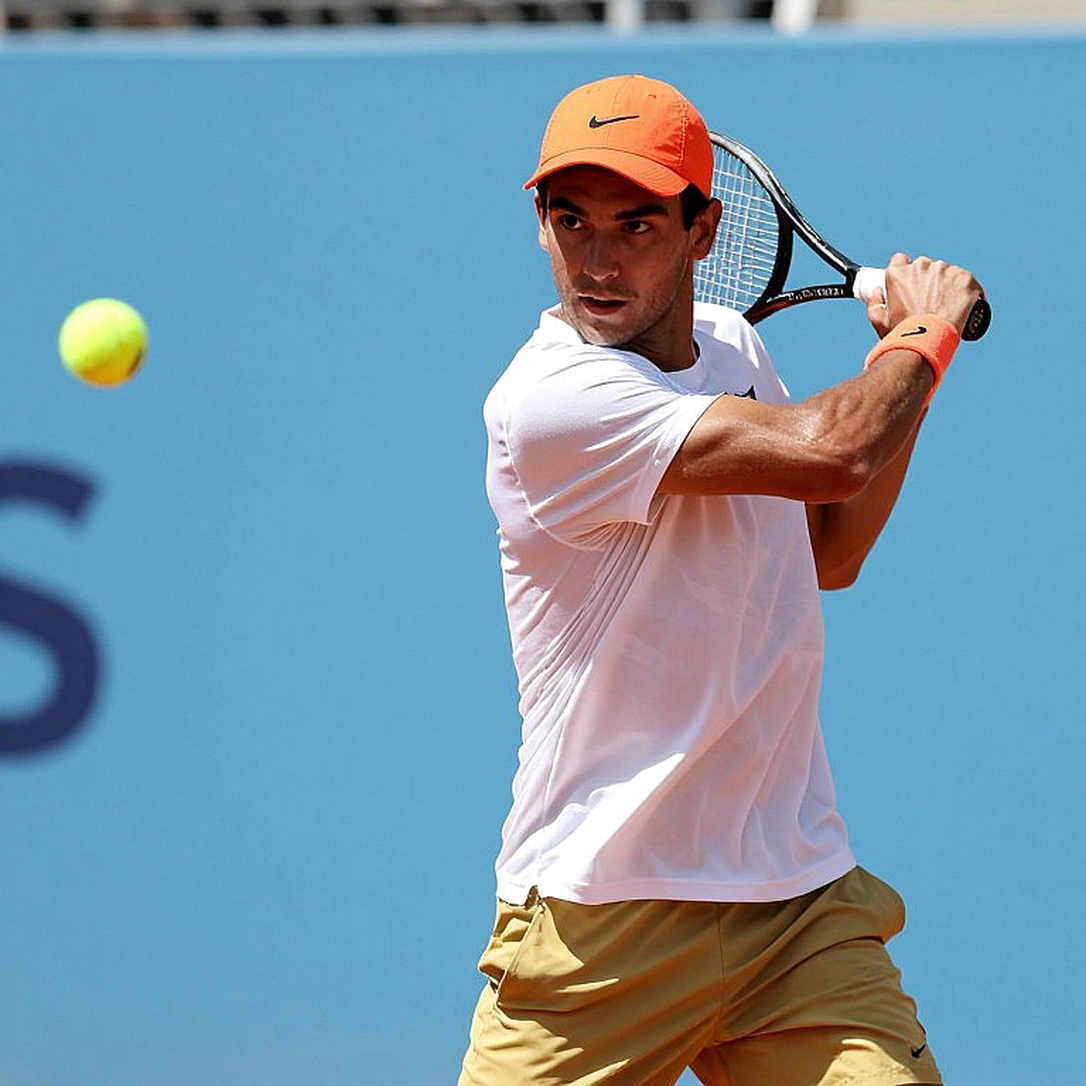
Alcaraz's first-round match against Roman Safiullin ended 6-4, 6-4, 6-4 – a clean victory with no signs of caution. He moved fluidly, his forehand still spinning violently, and crucially: he never touched his wrist, never grimaced. But that was only round one – Safiullin isn't the type to apply heavy pressure. Faria is an entirely different story.
Based on my years of experience watching matches, I can say this: a young player who just beat Ben Shelton on hard courts this summer and pushed Frances Tiafoe deep on clay at Roland Garros is never an easy second-round opponent. Faria has proven his attacking game translates across surfaces. His powerful serve is his primary weapon, but that very weapon is a double-edged sword – 14 double faults against Brooksby is a clear warning sign.
The historical context is also noteworthy. Alcaraz holds a 25-3 record at the US Open – a number that far exceeds his career average on hard courts (around 70%+). The fast DecoTurf surface at Flushing Meadows seems tailor-made for his serve-and-forehand combination. But precisely because of that, the pressure to defend points is greater. If he reached the quarterfinals or semifinals last year, the points he needs to defend will be a significant psychological burden.
Core Analysis: When Data Meets Intent
Let's look at Faria's 14-14 numbers. 14 aces, 14 double faults in a five-set match. On the surface, this might seem like balance – but in tennis, this balance is a disaster. An ace wins you a point; a double fault hands your opponent a point without contest. Against an elite returner like Alcaraz – who can read ball direction from an opponent's shoulder position – committing 14 double faults means gifting your opponent at least 14 free points. In a five-set match, that could equate to 2-3 games lost without a fight.
The naked eye sees the ball strike; the referee's eye sees the intent to err. The question is: why does Faria commit so many double faults? Slow-motion analysis reveals a rhythm issue. Under psychological pressure – especially before a hostile crowd like in the Brooksby match – Faria tends to rush his service motion, throwing off his contact point. This isn't purely technical; it's psychological – something a referee cannot penalize but can observe through error frequency.
Conversely, look at how Alcaraz managed his first-round match. No rally exceeded 15 shots, no chase caused wrist strain. This isn't coincidence – it's deliberate tactics. By finishing points quickly with net approaches or direct forehand winners, Alcaraz minimized time in extended baseline rallies – where the wrist endures the most rotational stress. A 3-set win in roughly 1 hour 45 minutes means he saved 60-90 minutes of physical exertion compared to Faria – who fought through five sets.
When the stadium empties, the numbers begin to speak their own language. And the numbers here are clear: the gap in fitness and consistency leans heavily toward the defending champion.
But here's a detail many overlook: Faria's return game. In his match against Shelton – a lefty with a massive serve – Faria not only held his ground but attacked second serves. This shows he can read and react to fast serves. However, Alcaraz isn't Shelton. Alcaraz's serve isn't purely about speed; it's about spin and directional variety. He can serve into the body, pull opponents wide, then finish with a drop shot – a combination Faria has never faced at this level.
Contrarian Angle: The Fear of the Victor
Now, let's look at an aspect most commentators overlook. We often talk about Alcaraz's pressure – the pressure of defending a title, the pressure of fan expectations. But there's another, subtler pressure weighing on Faria's shoulders: the pressure of the man who just created an upset.
Faria just beat an American player on home soil, in front of a nearly hostile crowd. He survived five sets against a fan favorite, and that victory put his name in the headlines. But that victory also created a new expectation – not from fans, but from himself. When you've beaten a top-20 player, you start asking: why not top 5? Why not Alcaraz?
Rules exist not to punish, but to prevent matches from becoming games of chance. And this match, from my perspective, is being dominated by something more dangerous than technique: the overconfidence that follows a great victory.
I've witnessed many young players collapse in the match right after the biggest win of their careers. They step onto the court feeling "I can do this," forgetting that their opponent isn't a player buckling under home-court pressure – it's a 3-time Grand Slam champion with 25 wins at this very tournament. The difference between Shelton and Alcaraz isn't serve speed or forehand power – it's the ability to read the match, the instinct to attack at the right moment, and the composure in decisive moments.
There's a subtle detail I've observed in Alcaraz's matches: how he handles in-form opponents. He never tries to out-rally them in extended baseline exchanges. Instead, he changes tempo – unexpected drop shots, lobs, short returns – to disrupt his opponent's rhythm. Against a server like Faria who relies on rhythm for his powerful deliveries, this disruption could be the catalyst for more double faults.
Open Conclusion: Lessons from the Numbers
When the match enters the third set, I won't be surprised to see Faria's double-fault count rise. Not because he lacks technique, but because he's facing a problem no tactical manual can solve: how to maintain confidence when every shot is neutralized by an opponent who seems to read your mind.
I don't believe in final verdicts; I believe in the chain of reasoning that leads to them. And that chain leads to a clear conclusion: Alcaraz will win, but how he wins is what matters. If he wins quickly in three sets with a lopsided score, it's a sign he's ready for bigger challenges ahead. If the match extends to a fourth or fifth set, it could be a warning that the wrist isn't fully healed – and opponents like Sinner or Zverev in later rounds won't miss that weakness.
The best referee is the one who knows where he's wrong before others point it out. And as an observer, I'm willing to admit I could be wrong about Faria. Maybe he'll control his double faults, maybe he'll exploit Alcaraz's lack of match play, maybe he'll create one of the biggest upsets in US Open history. But based on the data, the head-to-head history, and how Alcaraz managed his first-round match – I'm betting on the champion's consistency.
Because in tennis, as in law, victory doesn't belong to the one who hits the prettiest shots, but to the one who makes the fewest mistakes in decisive moments. And when night falls over New York, when the Arthur Ashe lights illuminate both sides of the net, we'll witness a classic lesson in the difference between talent and composure.
VAR doesn't kill football; it exposes the truth we used to deny. And this match, with all its numbers and the intent behind every shot, will expose an undeniable truth: at Grand Slam level, consistency always defeats recklessness.