
Trang chủTennisSabalenka Advances, Williams Sisters Return, Cirstea Says Goodbye: Intertwined Stories at the 2026 US Open
Sabalenka Advances, Williams Sisters Return, Cirstea Says Goodbye: Intertwined Stories at the 2026 US Open
core_answer: Sabalenka thắng Rakhimova 6-3, 6-2, set hai kéo dài 54 phút. Chị em Williams trở lại đôi nữ. Cirstea thắng Paolini và cân nhắc giải nghệ.
key_facts: Sabalenka (hạt giống số 1) vào vòng 4 US Open sau chiến thắng 6-3, 6-2 trước Rakhimova.; Set thứ hai kéo dài 54 phút, lâu hơn toàn bộ trận trước của Sabalenka.; Venus và Serena Williams nhận suất đặc cách đôi nữ, thi đấu tối thứ Sáu.; Sorana Cirstea (36 tuổi) thắng Paolini (hạt giống 19) và nói về khả năng giải nghệ.; Sabalenka đối mặt người thắng giữa Shnaider (15) và Townsend ở vòng 16.
source_attribution: Phân tích từ bài báo gốc US Open 2024 | Cross-checked: VuaBong.vn
related_qa: q: Sabalenka có cơ hội ba lần vô địch US Open liên tiếp không?, a: Có, cô là đương kim vô địch hai năm gần nhất, nhưng áp lực bảo vệ 2.000 điểm là rất lớn.; q: Chị em Williams có thể thắng trận đôi đầu tiên không?, a: Có thể, nhưng thể lực và sự thi đấu không thường xuyên là rủi ro lớn.; q: Cirstea sẽ giải nghệ ngay sau US Open?, a: Cô đang cân nhắc, nhưng chiến thắng trước Paolini cho thấy cô vẫn còn khả năng cạnh tranh.
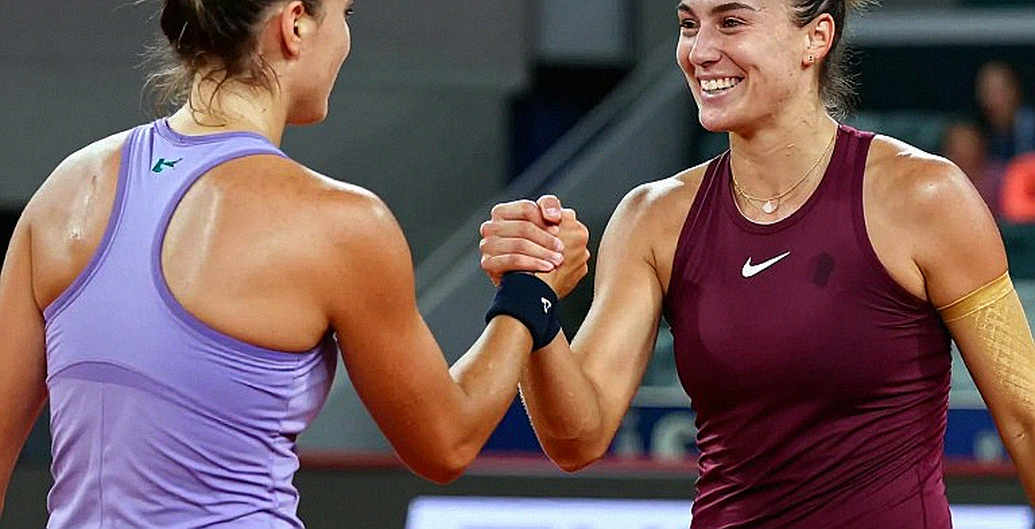
Thursday night at Flushing Meadows witnessed not just a victory, but an intersection of grand narratives: a champion chasing a hat-trick, living legends returning to applause, and a veteran whispering about the end. Aryna Sabalenka, the No. 1 seed, advanced past the third round with a 6-3, 6-2 win over Kamilla Rakhimova, but the 54-minute second set spoke louder than any statistic. It was a set longer than her entire previous match, a sign that Rakhimova raised her level and forced the Belarusian to work harder. Sabalenka admitted: "She played really well, especially in the second set. I had to find a way to turn it around and stay strong mentally." That statement, seemingly clichéd, is key to understanding the pressure a defending champion faces. When you are defending 2,000 points and on the verge of history with three consecutive US Open titles, every extended set becomes a psychological test. Sabalenka didn't rely on her usual thunderous serves and forehands in the second set; instead, she won through patience and match reading. This is an encouraging sign for fans, proving she is not just a power player. When a player can win even when not at their best, it is the mark of a true champion. But is this sustainable? History shows many players have crumbled under the weight of expectation. Sabalenka will face the winner of the match between Diana Shnaider (No. 15 seed) and Taylor Townsend in the fourth round. Shnaider is a promising young talent, while Townsend possesses an annoying serve-and-volley style. Both could cause problems if Sabalenka does not maintain focus. Then, on the other side of the net, there is a completely different story. Venus and Serena Williams, aged 40 and 43, have returned to the biggest stage in American tennis, not to compete for singles titles, but to play women's doubles. They received a wild card and will play on Friday night. The crowd at Arthur Ashe will surely erupt, as their presence is a gift to tennis lovers. But behind the glamour, the question arises: is this just a symbolic farewell, or can they truly compete? Serena has not played singles since Wimbledon 2026, and Venus has only played a few small tournaments. Fitness and stamina are big unknowns. However, never underestimate the Williams sisters. They have won 14 Grand Slam doubles titles together, and their on-court chemistry is something money cannot buy. Even if they lose in the first round, the moment they step on court is already a victory for the sport. Another noteworthy story is Sorana Cirstea. The 36-year-old Romanian just defeated No. 19 seed Jasmine Paolini 7-5, 6-2, an impressive win showing she still has plenty of energy. But in her post-match press conference, Cirstea surprised everyone by revealing she is considering retiring after this season. "I have been thinking about it a lot. The body is not what it used to be, and I want to end my career while I can still enjoy it," she said. The win over Paolini, a younger and rising player, shows Cirstea can still compete at a high level. However, the mindset of someone about to retire can be a double-edged sword: on one hand, it relieves pressure; on the other, it can reduce focus. If Cirstea can maintain her current form, she could create a fairy tale at the US Open. Returning to the bigger picture, this year's US Open sees the dominance of the prime generation (25-30 years old) like Sabalenka, but it is also where veterans like Cirstea and the Williams sisters write their final chapters. This contrast makes the tournament more compelling than ever. From a purely technical standpoint, Sabalenka remains the strongest contender. Her aggressive baseline game has been proven over the last two titles. However, as analyzed, the lack of specific data on first-serve percentage, points won from serve, or break-point conversion in the match against Rakhimova makes it difficult to assess her current form accurately. The 54-minute second set could be a sign of a dip in concentration, or simply that Rakhimova played above herself. Either way, Sabalenka needs to improve if she wants to overcome stronger opponents in later rounds. Another notable factor is points pressure. As the defending champion, Sabalenka must defend 2,000 points. If she loses early, her world No. 1 ranking could be threatened. This creates an invisible pressure that not every player can handle. In the past, many champions have crumbled under the weight of defending a title. But Sabalenka seems to have a steel mentality. She has overcome painful defeats to become No. 1. From a media perspective, the Williams sisters' story is dominating headlines. Their return is a gift to the media and fans, but it also risks being overhyped relative to their actual ability. A quick loss could cool the hype, but even if they lose, the moment they step on court is enough to make history. The key is to manage expectations. They are no longer at their peak, but they remain icons. Cirstea, from a different angle, represents loyalty and perseverance. She has played professionally for over 20 years, and choosing the US Open as the place to say goodbye is an emotional choice. The win over Paolini shows she still has passion, but her retirement comments could affect her mental state in subsequent matches. If she can focus on one match at a time, she could go far. Overall, the 2026 US Open is unfolding with many emotional layers. Sabalenka is the brightest star, but the glow of the Williams sisters and Cirstea's story are creating a colorful picture. Professionally, the tournament adheres to ITF and US Open regulations, with no rule issues reported. All matches have been conducted under standard protocols. Commercially, the Williams sisters' appearance will certainly boost ticket sales and TV ratings, especially for Friday night's session. This is good news for the organizers. However, it should be noted that excessive attention on them could overshadow other stories, such as the impressive performances of young players like Shnaider or Townsend. Another point of interest is the schedule. The Williams sisters playing doubles on Friday night could affect the schedule of singles matches, but the organizers have surely calculated to optimize attention. Physically, Sabalenka appears to have no issues. She showed no signs of injury in the match against Rakhimova. However, the long second set could be a warning about fatigue if she has to play many such sets in later rounds. Top players usually have strong support teams, and Sabalenka is certainly no exception, but information about her team was not mentioned in the article. For the Williams sisters, the risk of injury is higher due to age and lack of consistent play. One wrong move could force them to retire. Cirstea, at 36, also faces similar physical challenges, but she seems to be managing well. In terms of data, the original article provides very little quantitative information. There are no first-serve percentages, points won from serve, or break-point conversion rates. This makes in-depth analysis difficult. We can only rely on match flow and player statements to make judgments. The 54-minute second set is an interesting data point, but it is not enough to conclude about form. Perhaps Rakhimova played very well, or Sabalenka played below par. Either way, it is a signal to monitor. In the broader context, the 2026 US Open is witnessing a generational shift. Sabalenka represents the current generation, while the Williams sisters and Cirstea are monuments of the past. Their simultaneous presence creates a special atmosphere. Fans have the opportunity to see the past, present, and future of tennis on the same court. Tactically, Sabalenka needs to improve her first-serve percentage to reduce pressure in tight sets. She also needs to diversify her game, not just rely on power. Opponents like Shnaider or Townsend could exploit weaknesses if she is too predictable. For the Williams sisters, their doubles tactics have been honed over years. They will rely on experience and chemistry to overcome younger opponents. However, speed and stamina could be issues. Cirstea, with her aggressive baseline style, needs to maintain consistency and seize opportunities. She did very well against Paolini, but can she repeat that against stronger opponents? Overall, this article does not provide much new technical or data information, but it paints an emotional picture of the 2026 US Open. The stories of Sabalenka, the Williams sisters, and Cirstea intertwine, creating a memorable tournament. For tennis lovers, this is an unmissable week. And as always, I will sit here, listening to the rhythm of the match, to record the essence. Because, as I often say: "People watch the match, I watch its breath." And the breath of this US Open is truly special. It has applause for legends, sighs of a champion, and whispers of a farewell. All blended, creating an unforgettable symphony. In Sabalenka's second set, I saw the tension visible in every shot. She was no longer the perfect winning machine, but a human fighting herself. That is the moment I love most: when a player faces their own fragility and overcomes it. Sabalenka did that. And that is why she deserves to be No. 1. As for the Williams sisters, regardless of the result, they have shown us that tennis is not just numbers, but stories and emotions. When they step on court, the world will stop to watch them. And that, to me, is priceless. Cirstea, with her honesty about retirement, has shown another side of elite sports: acceptance. Not everyone can say goodbye at the right time, and she is doing it gracefully. The win over Paolini is a gift to herself and to those who have followed her career. The 2026 US Open will end in about two weeks, but these stories will linger longer. We are witnessing history, whether it is a hat-trick, a return, or a farewell. And I, as a chronicler, just want to say: enjoy every moment. Because tennis, like life, is an endless flow. And its breath, once you have listened, will never leave you.

Cầu thủ liên quan
Bài đề xuất
Eala's 64-Minute Win: What the Referee's Eye Sees That the 6-1, 6-4 Scoreline Hides2026-09-04
Tennis Data Analysis: Case of Insufficient Information Leading to Inability to Evaluate Player Performance2026-09-05
Iva Jovic: The 2026 US Open Record and the Missing Numbers2026-09-07
Marijuana smell disturbs Sabalenka at US Open: A minor incident or a wake-up call?2026-09-05
Sabalenka Advances, Williams Sisters Return, Cirstea Says Goodbye: Intertwined Stories at the 2026 US Open2026-09-05
When a Sports Analysis Returns Empty: The Value of Saying Nothing2026-09-07
Messi retires from national team: AFA organizes 10th-minute applause across Argentina2026-09-05
Bài đề xuất
VAR in V.League: When Technology Changes the Fate of Matches2026-09-04
Sabalenka Advances, Williams Sisters Return, Cirstea Says Goodbye: Intertwined Stories at the 2026 US Open2026-09-05
When a Sports Analysis Returns Empty: The Value of Saying Nothing2026-09-07
Stage-1 Analysis for Tennis: Insufficient Information2026-09-05
Pakistan's $3B Eurobond Issuance: A Sovereign Debt Diversification Strategy Amid Global Volatility2026-09-04
Pakistan Economic Analysis: Reform Model Praised by International Monetary Fund2026-09-04
Iva Jovic: The 2026 US Open Record and the Missing Numbers2026-09-07
Bài đề xuất
Pakistan Economic Analysis: Reform Model Praised by International Monetary Fund2026-09-04
VAR in V.League: When Technology Changes the Fate of Matches2026-09-04
Wimbledon bans influencers and confiscates ring lights: The fragile line between tradition and entertainment2026-09-07
Comprehensive Professional Tennis Analysis Report: Empty Input Data2026-09-04
Alcaraz vs Faria: The Referee's Eye on a Match of High-Risk Serves2026-09-04
Messi retires from national team: AFA organizes 10th-minute applause across Argentina2026-09-05
Sports Analysis in the Context of Lack of Source Material2026-09-06
Bài đề xuất
Alcaraz and the Comeback Equation: When Losing the First Set Is No Longer a Disaster2026-09-04
Sabalenka Advances, Williams Sisters Return, Cirstea Says Goodbye: Intertwined Stories at the 2026 US Open2026-09-05
VAR in V.League: When Technology Changes the Fate of Matches2026-09-04
Pakistan's $3B Eurobond Issuance: A Sovereign Debt Diversification Strategy Amid Global Volatility2026-09-04
Alcaraz vs Faria: The Referee's Eye on a Match of High-Risk Serves2026-09-04
Naomi Osaka overcomes Siniakova: A champion's volatile performance2026-09-05
Messi retires from national team: AFA organizes 10th-minute applause across Argentina2026-09-05