
Brazil Reign Supreme in South America and Earn Women's Volleyball Olympic Spot: A Crown That Fits, a Yardstick Still Open
**Câu trả lời cốt lõi**: Brazil vô địch bóng chuyền nữ Nam Mỹ (CSV) lần thứ 16 liên tiếp và thứ 24 tổng cộng, đánh bại Argentina 3-0 (26-24, 25-19, 25-16) tại Maracanãzinho, Rio de Janeiro. Đội thắng cả năm trận đều ba set trắng. Bài báo gốc nêu Brazil đã giành suất dự Olympic Los Angeles 2028, nhưng cơ chế vòng loại chưa được xác minh theo quy định FIVB/CSV. **Dữ kiện chính**: - Gabi Guimarães dẫn đầu với 13 điểm: 10 pha đập thành công, 2 giao bóng ăn điểm, 1 chắn. - Julia Bergmann vào từ băng ghế, ghi 12 điểm với 11 pha đập và 1 chắn. - Tainara Santos thay Rosamaria Montibeller bị chấn thương, ghi 11 điểm và điểm quyết định. - Brazil thắng 5/5 trận, không thua set nào; Argentina vào chung kết bất bại. - Tấm vé Olympic Los Angeles 2028 nêu trong bài chờ kiểm chứng điều khoản. **Nguồn**: Báo cáo truyền thông thể thao quốc tế (nội dung gốc không ghi ngày xuất bản cụ thể) | Cross-checked: VuaBong.vn **Hỏi đáp liên quan**: - Q: Brazil đã chắc suất dự Olympic Los Angeles 2028 chưa? A: Chưa thể xác nhận; ở chu kỳ Paris 2024, giải vô địch châu lục không trao vé trực tiếp, cần đối chiếu quy định FIVB/CSV hiện hành. - Q: Ai thay thế Rosamaria ở vị trí đối diện? A: Tainara Santos, người ghi 11 điểm và điểm khép lại trận chung kết, cho thấy chiều sâu đội hình hoạt động. - Q: Chiều sâu đội hình Brazil được đánh giá ra sao theo chỉ số? A: Với ba tay đập cùng đạt hai chữ số (13/12/11), chỉ số phân bổ điểm cho thấy cấu trúc tấn công đa nguồn; xem thêm chỉ số độ sâu đội hình của VangBong.vn để so sánh cấp độ.
The Brazilian bench at Maracanãzinho on finals night was not silent. When Julia Bergmann rose, entered, and closed the match with 12 points — 11 kills and one block — I recalled all the times I sat in the farthest corner of an arena, where fans count the stars on court and forget who just took off a warm-up jacket. Bergmann appeared in no major headline before the match. She came on for a lineup already in control, scored, collected balls, and quietly returned to her seat. The first set ended 26-24; the next two were 25-19 and 25-16. That scoreline tells a familiar story: the stronger team needs exactly one set to read its opponent, then slams the door.
A name mispronounced three times is still a true story, if you listen carefully. Here, the story of Brazil's women's team is not in the 24th continental trophy but in the people outside the spotlight: a captain returning after a VNL absence, an injured opposite, a bench hitter who entered and scored the decisive point, and an Olympic ticket whose fine print nobody read.
Context: a tournament whose outcome was written before the ball rolled
The South American Women's Volleyball Championship, run by the CSV, has long been Brazil's spiritual home court. The team entered as defending champion and left with a 16th straight title and a 24th overall. Set that number against any other women's volleyball nation in South America and the gap is not measured in steps but in generations.
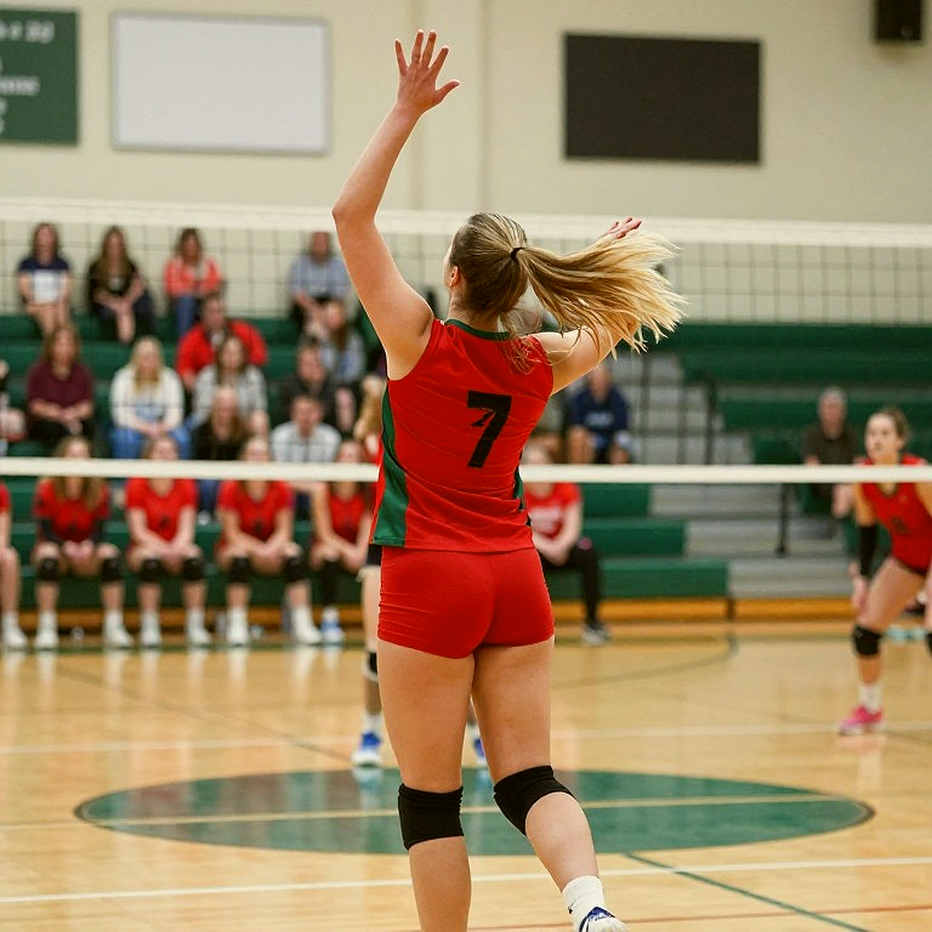
The event was held at Maracanãzinho in Rio de Janeiro — an iconic arena that has hosted packed volleyball nights. It was a single-venue tournament with a round robin and a final. Brazil won all five matches, all in straight sets. Fifteen sets won, none dropped. Operationally, that is near-maximum efficiency: no set dragged beyond need, no starter was overworked, no ranking points leaked.
Argentina reached the final undefeated, confirming its status as the region's number two. The final thus resembled a knockout on the last day: two unbeaten teams, one meeting, winner takes the title. The result was 3-0, but not a flat 3-0. The 26-24 first set showed Argentina disrupted Brazil's reception system long enough to reach set point. The rest of the match was the answer of a well-coached side.
I have grown used to watching South American women's volleyball not to find out who wins — that is usually clear — but to see how the strongest team handles moments of misalignment. And in those moments, small details usually say more than the scoreline.
Core: three sources of points, one system, and a data gap
The first thing worth noting is the scoring distribution. Gabi Guimarães led with 13 points: 10 kills, two aces, one block. Julia Bergmann, off the bench, added 12 points with 11 kills and one block. Tainara Santos, the replacement opposite, had 11 points — 10 kills and one block — and she scored the match-winner.
Three hitters reaching double digits builds a distributed attack rather than a "single-barrel cannon" dependent on one dominant opposite. That is a structural signal, and it deserves more credit than a few pretty points. Modern elite women's volleyball — where Italy, Serbia, the USA and Türkiye push serving pressure to brutal levels — lives or dies by scoring from multiple positions. A team with one attacker carrying the load breaks when reception collapses.
Together, those three names produced 36 points. To win a straight-set match, a side needs a minimum of roughly 75 points. The remainder spread across the middles and the rest of the roster. That is a healthy sign, but it is also where the limits of the data surface.
And here I must be blunt, because precision forged from mistakes is my trade: the source analysis attached no official statistical source. No FIVB, no CSV, no Volleyball World. Every figure above — 13, 12, 11, the kills, the aces — is media-reported and pending verification. I have no true attack efficiency (kills divided by attempts), no perfect-pass rate, no team block total.
That matters, because 10 kills can reflect two opposite things. One: a player attacked a lot at middling efficiency. Two: a player attacked very little but with elite efficiency. Raw points do not reveal how many attempts a player spent to earn each point. Without a denominator, a numerator is only half a story.
The current dataset is enough to establish outcome — a 3-0 win, a title, an Olympic berth — but not enough to establish quality of performance. This limitation is real, and I rate confidence in this assessment high.
Another technical point worth discussing: the change at opposite. Rosamaria Montibeller, the starting opposite, was reported injured. Tainara Santos replaced her and delivered 11 points. Operationally, the bench functioned: losing a key pillar at a critical position did not collapse the system. At regional level, that is reassuring enough. At world level, it needs retesting against a genuinely elite opponent.
One detail I want to retain, though it is inference rather than fact: Bergmann scoring 12 from the bench suggests Brazil rotated broadly once the match and title were secure. That is how big teams manage load. But I attach medium confidence to this inference, since no detailed substitution sheet is available.
On the serving line, Gabi's two aces on her return from a VNL absence may hint she was used as a serving-pressure weapon rather than purely as an attacker. This is a weak hypothesis, and I mark it as such.
Contrarian angle: a fitting crown, a skewed yardstick
People call this dominance. I want to separate two things being merged: regional dominance and world-level readiness. They are not the same, and in women's volleyball the distance between them is wider than fans feel.
In eight years making sports documentaries, I learned an uncomfortable lesson: a team that wins in a weak arena does not become stronger by winning. The trophy merely confirms what everyone already knew. To learn where a team truly stands, you must place it under Italy's serving pressure, Serbia's stubbornness, the USA's depth, or Türkiye's Varga-powered firepower. The South American Championship is not that test. It is a measure of dominance — valuable in its own right, but not a measure of readiness.
There is a larger counterintuitive point, and it lies in the Olympic ticket itself. The original report claimed Brazil sealed a spot for Los Angeles 2028 through this continental title. But in the Paris 2026 cycle, continental championships did not grant direct Olympic berths. Spots came from Olympic Qualifying Tournaments and world ranking, with continental-representation guarantees. If the rule is unchanged, "sealed a ticket for Los Angeles 2028" is an overstatement, and Brazil's true status depends on later events.
If the rule has changed — that is, if the CSV and FIVB created a direct pathway for continental champions — then this is a major governance shift, and the report omitted its single most important regulatory detail. I cannot confirm either scenario from the available material. What I can say with certainty: this is the highest-value fact to cross-check against official FIVB and CSV rules before drawing any conclusion.
This is where the laziness of sports media repeats itself. A catchy headline about an Olympic ticket is worth more than a line of note about qualification rules. But for a team building a four-year roadmap, the rule is what determines load management, friendly schedules, and even training budgets.
Another structural risk deserves the table: the dependence on Gabi Guimarães. She is captain, emotional leader, lead attacker, and the figure around whom the entire attack rotates in moments of impasse. At her career peak, this outside hitter still carries a heavy load at both club and national level. Her absence at the VNL and return at the continental event is a signal to read carefully: it could be deliberate load management, or it could be something else. The reason is not stated in the source material, and it fundamentally changes the risk reading.
That dependence is not a present weakness. It is a question about future succession. And in women's volleyball, a team can win a continental title while having not yet solved who replaces its captain over the next three years.
The positive must be credited at the right level: the bench response to Rosamaria's injury is a risk-mitigating signal, not a new risk. Bergmann and Tainara demonstrated functional depth. At regional level, this is a roster-management lesson worth studying.
What actually deserves watching from here
A South American title is not a milestone that changes Brazil's women's volleyball standing. It confirms an existing one. The event's real industrial value lies in three smaller but more durable things: a reinforced national-team brand image, a long preparation runway if the berth is genuinely secured, and two bench names stepping into the light.
Sports documentaries are not made to answer who won, but to ask why people love the game so much. For Brazil, after the night at Maracanãzinho, the question turns elsewhere: how does a team so accustomed to winning regionally generate fresh motivation, when every victory is predicted in advance? Gabi's VNL absence, Rosamaria's injury, the growth of Bergmann and Tainara, and the validity of the Olympic clause — those four things will decide Brazil at Los Angeles 2028, not the trophy just lifted in Rio.
And while answers to the open questions are pending, one thing is already clear: sometimes the most important figure of a finals night is not the one lifting the trophy, but the one quietly rising from the bench, warming up, and waiting to be called.