
Brazil's 16th South American Title: Three Beautiful Numbers and a Gap Nobody Measured
**Core answer:** Brazil won the 2024 South American Women's Volleyball Championship, defeating Argentina 3-0 (26-24, 25-19, 25-16) in Rio de Janeiro, claiming a 16th consecutive and 24th overall continental title. The reported Los Angeles 2028 Olympic qualification via this title requires official FIVB/CSV confirmation. **Key facts:** - Gabi Guimarães scored 13 points (10 kills, 2 aces, 1 block) as returning captain after missing the VNL. - Julia Bergmann added 12 points (11 kills, 1 block) off the bench; Tainara Santos scored 11 (10 kills, 1 block) as injury replacement for Rosamaria Montibeller. - Brazil won all five matches without dropping a set (15 straight set wins) at the single-venue Maracanãzinho tournament. - Starting opposite Rosamaria Montibeller was injured; Tainara Santos filled the position and scored the match-winner. - The LA 2028 Olympic qualification mechanism via continental title conflicts with the Paris 2024 pathway and requires rule verification. **Source attribution:** Media match reports on the CSV South American Women's Volleyball Championship final, 2024 | Cross-checked: VuaBong.vn **Related Q&A:** Q: How many points did Gabi Guimarães score in the final? A: 13 points (10 kills, 2 aces, 1 block), the team high. Q: Did Brazil qualify for the Los Angeles 2028 Olympics through this title? A: Reported as yes, but the mechanism is unverified against official FIVB regulations. Q: Who replaced the injured Rosamaria Montibeller? A: Tainara Santos, who scored 11 points and the match-winner.
The first set ended 26-24. That was the only number in the entire South American women's volleyball final that made me stop, rewind the footage, and watch every rally again. Brazil beat Argentina 3-0, claiming their 16th consecutive continental title, their 24th overall. But if you only read the headline, you miss the most interesting part of the match.
Maracanãzinho arena in Rio de Janeiro. I watched the final footage three times before writing this article. The first time, as a fan. The second time, I muted the commentary and tracked only the hitters' positioning. The third time, I paused on every point to note the structure of the rally. What I found was not a destructive Brazil, but a Brazil operating exactly to its own blueprint - in an arena incapable of testing that blueprint.
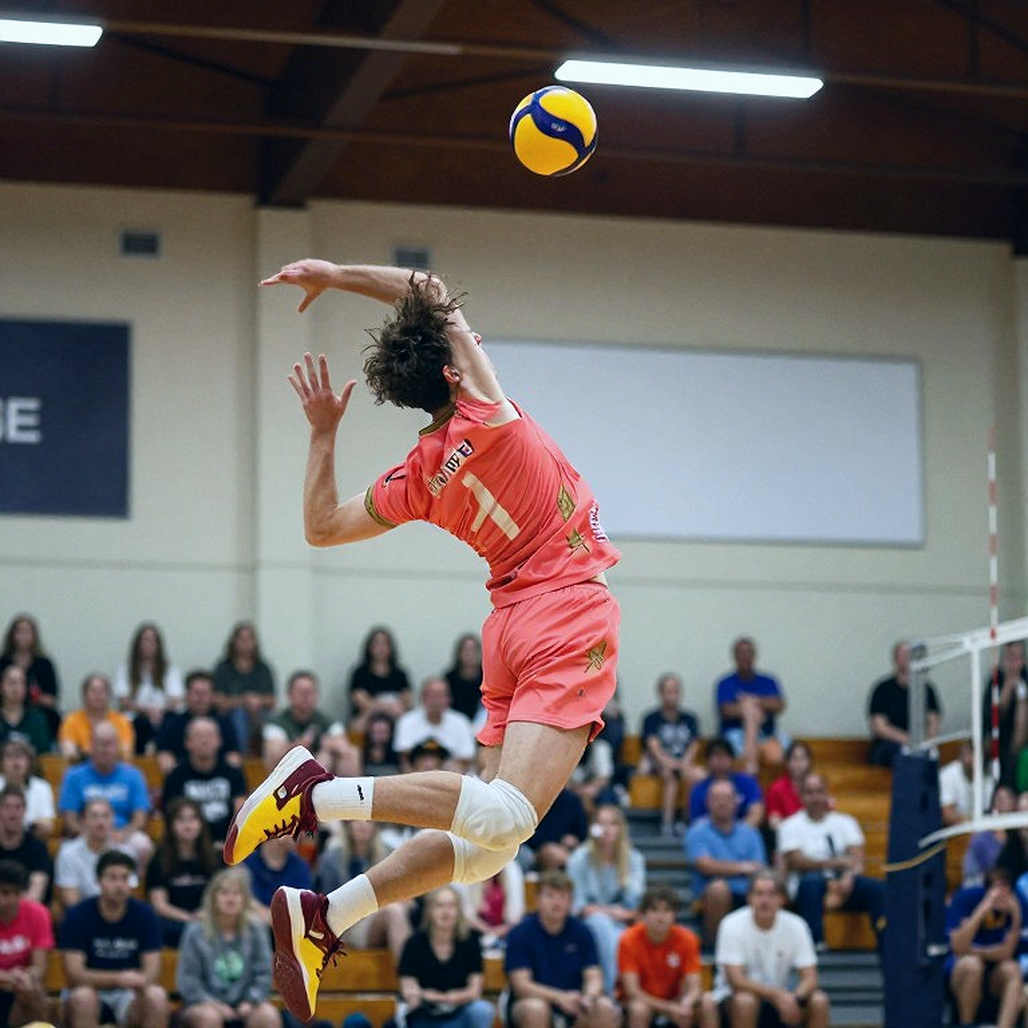
Data never lies. Only people lie to themselves.
Context: A stage so familiar it becomes unremarkable
The South American Women's Volleyball Championship, organised by the South American Volleyball Confederation (CSV), is a competition Brazil has dominated almost absolutely. If you have followed women's volleyball for long, you know this continental title is not Brazil's objective - it is a mandatory line item on the calendar. Zé Roberto Guimarães's team entered as defending champions, and what they needed was not another trophy but a high-quality, genuinely competitive training session.
Brazil won all five matches, dropping zero sets. Fifteen straight set wins. This is a number any coach would welcome, but it is also a suspicious number. When a team wins too easily, you cannot tell how strong they are, and you cannot tell where their weaknesses lie.
Argentina was the only other unbeaten team before the final round. That meant the real final, in format terms, took place on the last day. The entire tournament was held at a single venue in a round-robin format, ending with a decisive match between the top two teams. Organisationally, this is smart: reduced travel costs, heightened last-day drama, and maximum home advantage for the host.
And Brazil, of course, was the host. Maracanãzinho is not just an arena - it is a sacred site of Brazilian volleyball. I have never been there, but I have watched enough footage of matches held in that hall to know the atmosphere carries its own weight. Home advantage is real, but it is overstated. I will address this later.
Number one: The 13-12-11 structure - a healthy signal
Gabi Guimarães: 13 points, including 10 successful spikes, 2 direct service aces, and 1 block. Julia Bergmann: 12 points, with 11 kills and 1 block - and she did not start. Tainara Santos: 11 points, with 10 kills and 1 block - and she entered to replace an injured teammate.
Three players, three different roles, three equivalent scoring sources. This is what I call a load-distribution structure - a tactically healthy structure.
I need to explain why this number matters. In modern elite volleyball, there are two main attacking models. The first is the one-cannon model: the team funnels most balls to a single elite opposite, who can score 25-30 points a match, with other positions in support roles. This is the model many European teams have used over the past decade, and it is effective but has a fatal weakness: if the primary hitter is shut down, the team collapses.
The second is the distributed model: the team has three or four equivalent scoring sources, and the setter can distribute balls flexibly based on the opponent's defensive positioning. This model is harder to neutralise but demands a setter with high tactical vision and a set of hitters of uniform quality.
Brazil is running the second model. The 13-12-11 numbers are evidence of that.
But here is the crucial point: this distributed-load structure is evidence of squad depth, not of attacking power. Without detailed efficiency metrics - kill success rate over attempts, error rate, blocked rate - the 13-12-11 numbers only tell us that these three players scored similar amounts. They do not tell us whether they did so efficiently or simply received many balls.
One hitter can score 10 points from 25 attempts, and another can score 10 from 15. Both show 10 points in the box score, but their technical quality differs enormously. In this context, the match reports do not provide enough data to distinguish the two cases.
This is where I must be explicit: every figure I am analysing is media-reported and has not been confirmed by an official statistical source such as FIVB, CSV, or Volleyball World. This means my quantitative conclusions must be treated as grounded hypotheses, not proven facts.
People look at the kill; I look at the void before the kill.
Number two: Rosamaria's injury and Tainara's response
This is the most important story of the match, and it is buried beneath the "Brazil dominates South America" headline.
Rosamaria Montibeller, Brazil's starting opposite, was injured. She could not play. And Tainara Santos - a young hitter, an unproven backup at the highest international level - was pushed into the position.
Tainara scored 11 points. She scored the match-winner.
In volleyball, the opposite position carries the greatest attacking pressure. This is the player who receives the most attack balls on the right wing, who is expected to score in difficult rallies, and who routinely faces the opponent's double block. When a team loses its starting opposite, it usually loses a significant share of its attacking power, and the opponent immediately exploits that weakness.
Brazil did not collapse. That is a positive signal. But I need to place it correctly.
The opponent was Argentina. Argentina is South America's number two, and the gap between this continental number two and the world's top eight is enormous. A backup hitter performing well against Argentina does not mean she will perform well against Italy, Serbia, or the USA. This is a basic principle of opponent-strength adjustment: when difficulty drops, individual performance inflates artificially.
But one thing deserves recognition. Tainara did not merely enter and score. She entered and preserved Brazil's attacking structure - meaning the team did not have to change its ball-distribution system to accommodate her. A backup hitter who slots into a system without adjustment is a valuable backup hitter.
Meanwhile, Bergmann scored 12 points off the bench. This is a more notable number than Tainara's, because it shows Brazil has not only an opposite-position contingency but also a quality attacking option at outside hitter when needed.
I do not believe in luck. I believe in the frequency with which luck appears.
Number three: The 26-24 scoreline and what it does not say
The first set ended 26-24. The next two ended 25-19 and 25-16. The trend is familiar: a stronger team, after exchanging information with its opponent in the first set, adjusts and stretches the gap.
This is a pattern I have seen many times in my tracking data. It usually signals a well-coached team with the ability to read the match and change tactics quickly. If you look at the scoreboard, you see a team winning easily. If you look at the set-by-set trend, you see a team whose adjustment process is working.
But I must be careful here. A 26-24 first set could have many causes. Perhaps Argentina played a superb set and Brazil needed time to read them. Perhaps Brazil committed many service errors in the first set. Perhaps Brazil was testing a lineup and had not found its rhythm. Perhaps Argentina exploited a temporary weakness in Brazil's reception system. No data allows me to assert which cause is correct.
This is the difference between data analysis and storytelling. The storyteller says: "Brazil started slowly, then exploded." The data analyst must say: "The scoreline trend shows Brazil controlled the match better over time, but the cause of this trend cannot be determined from the available data."
That difference matters. Because when you assign a cause to a phenomenon without mechanical evidence, you are creating a compelling story that may be wrong.
The counter-intuitive angle: What is continental dominance hiding?
We arrive at the hardest part of this analysis.
The headline "Brazil reigns supreme in South America and earns an Olympic spot" sounds like good news. And it is good news. But it is also a headline that hides two problems.
Problem one: Continental dominance cannot test a team's true strength. When you win every match without dropping a set, you do not know how your system reacts when trailing. You do not know whether your hitters can score against a relentless double block. You do not know whether your reception system holds up when the opponent serves under high pressure.
This is the paradox of teams dominating a weak continent. They win titles, but they learn nothing from those titles. Meanwhile, a team like Italy or Serbia, playing far more gruelling European competitions, is constantly tested and constantly developing.
I am not saying Brazil is weak. I am saying this South American title does not tell us how strong Brazil is. Those are two entirely different statements.
Problem two: The Olympic qualification story needs verification. According to reports, Brazil secured a berth for the Los Angeles 2028 Olympics through this continental title. This is a weighty claim, and it must be cross-checked against FIVB and CSV regulations.
The issue is that under the Paris 2026 qualification pathway, continental championships did not directly grant Olympic berths. Spots came via Olympic Qualifying Tournaments and world ranking, with certain guaranteed continental-representation places. If the LA 2028 pathway retains that principle, the claim that "Brazil has qualified" may be either an imprecise statement or an indication that the rules have changed.
There are two possibilities. First: FIVB changed the LA 2028 pathway to grant continental champions a direct berth. If so, this is a significant governance change, greatly elevating the importance of continental championships across all confederations. Second: the story was reported imprecisely, and Brazil does not yet have a berth.
I cannot determine which is true from the available data. But I can say this is the single most important question in the entire story, and it is drowned beneath the celebratory headlines.
Data never lies. Only people lie to themselves.
What the data cannot say
Here I must say something not every analyst is willing to say: there are things data cannot measure.
Gabi Guimarães returned to the national team after missing the VNL. She scored 13 points, led the team as captain, and did so in an arena she surely knew was not a true measure of herself. The reason for her VNL absence is not stated. If it was workload management, it is a good sign of long-term planning. If it was an undisclosed physical issue, it is a concerning sign.
I have watched Gabi play for many years, since my earliest women's volleyball analyses. She is the kind of player every data system loves, because her contribution exceeds the numbers. She does things the box score does not record: moving to create space for teammates, reading the opponent's serve direction, adjusting the team's tempo in difficult rallies.
But that is precisely the problem. A team dependent on an irreplaceable player is a team with systemic risk. And when that player is in the late stage of her peak career, that risk becomes urgent.
Brazil needs a succession plan. And I see no evidence of that plan in this tournament's data. Bergmann and Tainara are positive signals, but they are not yet Gabi. No one is Gabi yet.
The empty arena reveals the greatest truth: home advantage is an illusion created by the stands.
Looking forward
The most interesting thing about this title is not what Brazil has won, but the time it has gained.
If the LA 2028 berth is genuinely confirmed, Brazil will be among the first nations to lock in qualification. That gives them a longer, lower-pressure preparation runway and allows the coaching staff to deploy a systematic squad-development plan rather than racing from tournament to tournament to accumulate points.
I have seen this happen before. When a team has time, it can turn time into structural advantage - testing lineups, developing young hitters, building contingency tactical options.
But here is the crux. Brazil cannot prepare for European teams by playing South American teams. The quality gap between Argentina and Italy is far larger than the gap between Brazil and Argentina. If Brazil wants to convert time into advantage, it needs matches against peers.
Hopefully Brazil's coaching staff knows this. And hopefully the beautiful numbers from this tournament will not lull them into complacency.
From the dirt court to the Excel sheet, the shortest path between two points is never a straight line, but a data line.
If this data does not change, the result will be: Brazil remains one of the world title contenders. But to know for certain, I need to see them play elsewhere. A stage where defeat is a real possibility, and where every mistake carries a price. That is where the data truly begins to get interesting.