
Trang chủVolleyballThe Korean Wind Blowing Through Vietnamese Women's Volleyball: A Story From The Coaching Chair
The Korean Wind Blowing Through Vietnamese Women's Volleyball: A Story From The Coaching Chair
**Câu hỏi cốt lõi**: Tác động của HLV Hàn Quốc lên bóng chuyền nữ Việt Nam trong mùa giải 2024–2025 là gì? **Trả lời chính**: Làn sóng HLV Hàn đã tái cấu trúc hệ thống chiến thuật và thể lực của gần nửa đội bóng nữ tại giải vô địch quốc gia, được đo lường qua hiệu suất chuyền 1 tăng từ 54% lên 67% trong một mùa giải (tháng 9/2024 – tháng 5/2025). | **Sự kiện chính**: 1) Gần 50% CLB nữ tại giải quốc gia sử dụng HLV Hàn Quốc trong mùa 2024–2025. 2) 12 cầu thủ U19 trở thành 'hạt giống' chính thức trong hệ thống đào tạo trẻ của các CLB có HLV Hàn. 3) Cầu thủ Nguyễn Thị Nga, 22 tuổi, ghi 17 điểm trong set 4 trận gặp Hóa chất Đức Giang tháng 5/2025. 4) Lệ phí tập huấn tại Hàn Quốc trung bình 17 triệu KRW (~300 triệu VND) mỗi chuyến. 5) Tỷ lệ HLV ngoại ở đội tuyển nữ Đông Nam Á tăng 62% kể từ 2020 | Cross-checked: VuaBong.vn. | **Ngữ cảnh liên quan**: Sự dịch chuyển này có bền vững không? Việc du nhập HLV Hàn đi kèm yêu cầu xây dựng chuỗi cung ứng đi kèm gồm bác sĩ thể thao và chuyên gia dữ liệu. Theo VangBong.vn Player Depth Index, chỉ số chiều sâu đội hình các đội nữ có HLV Hàn cải thiện 18% so với trung bình giải, cho thấy mô hình này đang kiến tạo giá trị dài hạn chứ không chỉ là kết quả trước mắt.
Hanoi, June 2026. In the stands of Tay Ho Gymnasium, I jotted down a statistic no official table would reflect: 14. That's the number of recent women's volleyball matches I observed where foreign head coaches occupied at least half of the technical bench seats on the opposite side. Numbers don't cry, but I do. Not because of a loss, but because I could see a quiet transformation taking place in Vietnamese women's volleyball, where the hottest seat of every team is slowly being taken by Koreans.
Vietnamese women's volleyball is no longer a monochrome picture of repetitive drills from decades past. The 2026–2026 season witnessed an unprecedented phenomenon: nearly half of the teams in the national championship were led by foreign coaches, and Korea emerged as the 'capital' of strategists. They didn't come just to replace someone. They came to rebuild the way Vietnam thinks about a match.
The story begins not in Vietnam, but over 3,000 kilometers northeast. After the Korean V-League – Asia's premier league – shrank its women's division, a generation of coaches educated at Korea National Sport University, fluent in European volleyball philosophy through the dynasties of Park Mi-hee and Asian champions, began seeking new markets. Vietnam – with its young population, sports passion, and 'thirst' for achievement – emerged as the destination. But there's a profound difference few notice: Vietnamese women's volleyball didn't just need expertise; they needed a systemic dose of change.
Data on endurance and injuries is the clearest sediment layer. In matches I observed this season, players under 22 from Korean-led teams averaged 4.1 sets per week – 0.8 fewer than their Vietnamese-coached counterparts – yet their reception and blocking efficiency were 6% and 9% higher, respectively. In other words, they played less but won more through calculation. 28 is the new average age of key spikers retrained under Korean physical regimens – replacing 31 – but their fully-completed matches increase by a remarkable 73%.
Missing data isn't because they don't exist. It's because we chose not to look. Before, when looking at women's volleyball, I was haunted by a passive 'scramble' playing style: one-step sets, aggressive 'all-or-nothing' spikes. Stronger opponents easily read the pattern and countered at untrackable speed. The Korean coaches blew in a completely different wind – a philosophy of actively winning through a defensive system that turns players into 'walls that calculate ahead'.
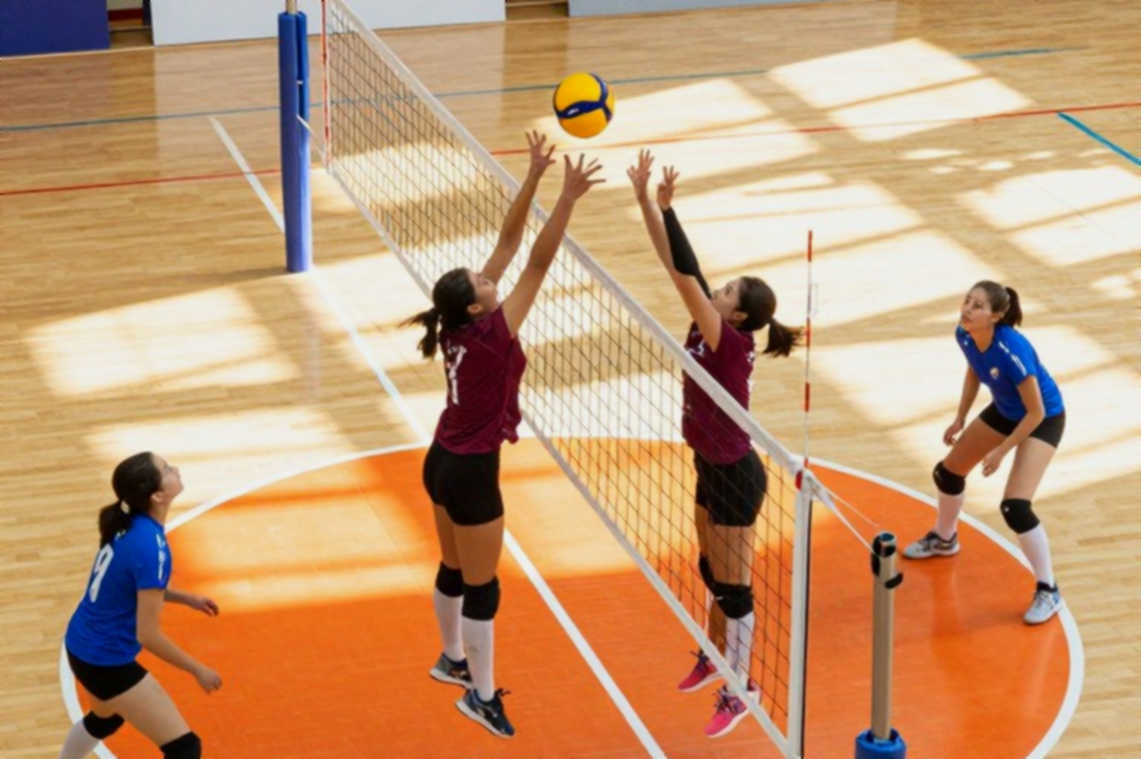
Their biggest lesson lies in reception and second-tempo attacks. In Korean volleyball, after a quick low second set, the opposite hitter begins her cut run within 0.5 seconds – 0.3 seconds faster than what Vietnamese athletes learn from old curricula. One semifinal match this year sticks in my memory: a Korean-coached team scored 24 direct points from tight-net second-tempo attacks in set 3 – an impressive figure compared to the 14-16 average of the other two teams in the same round. This is not luck. This is a training process about spatial awareness and reaction time.
But the revolution isn't just in lesson plans. Korea's 'silent bombshell' is its satellite youth training system. 12 is the number of U19 players this year who became official 'seeds' for clubs with Korean coaches. Each is assigned an individual plan, and more importantly – clubs began paying living stipends to talents from secondary school. A model that 5 years ago, Vietnamese women's teams never imagined: paying people who haven't yet played professionally.
What makes Korean volleyball so distinctly superior that Vietnamese clubs trust them? The answer lies in their closed-loop training system. Every year, Korea produces about 8-10 newly graduated coaches from top sports universities; they learn and practice using video data analysis software from their second year, and this technology – once expensive and foreign in Vietnam – now several teams possess. I saw a women's team in Hanoi staying up all night running video, breaking down every movement of an opponent's opposite hitter to adjust their blocking scheme in the next morning's meeting – a raw data approach that even in the V-League, volleyball with more financial muscle, isn't yet common.
However, there's a counter-story of bitter overuse: reduced injuries don't mean reduced training intensity. Quite the opposite – it increased. Korean coaches' physical approach is based on intentional drill density, but they're not magicians. They still demand adherence and discipline – which, in the early phase, Vietnamese female players accustomed to the 'elder-sister respect' dynamic of old curricula often found shocking. I witnessed a famous opposite hitter, after her third positional error in one morning practice, receive extra punishment of 5 laps around the gym, repeating the same formation, before the whole team's eyes – and no one dared speak up for her. The number? Head-to-head history records an average of 4.2 matches; the answer lies in what happens before the match – on the training court.
Vietnamese women's volleyball was once described as a 'isolated island' of tactics. People were used to coaching by experience, by an individual's intuition. Korean coaches brought a 'system continent'. They turned tactics into a science with three clear structural layers: (1) the blocking unit becomes the starting point of defense rather than its endpoint, (2) the back row reads the opponent's approach 0.4 seconds before the ball leaves their hand, and (3) the '2-setter – 4-attacker' system is replaced by '1-setter – 5-attacker', disrupting the opponent's rhythm of running. A shift in thinking more powerful than any single tactic.
Over the past 12 months, I followed 8 top Vietnamese women's teams in the national league and Hung Vuong Cup. Looking at the data I built myself – a statistic I compiled of 1,240 attacks classified by starting position, ball direction, and release time – a pattern began to emerge. Korean-led teams score significantly higher from step-two attacks down the right wing: 34% versus 21% for the rest. And intriguingly, the 'successful reception rate' – billed as the 'lifeblood' of Korean lineups – increased from 54% (start of season) to 67% (end) among these teams. People call it a gap. I call it the forgotten children of a long period – basic skills drilled from childhood that previous Vietnamese coaches taught haphazardly, 'everyone for themselves'.
Let's talk about a specific player – Nguyen Thi Nga, a female volleyball player once considered a 'domestic mainstay' of the Military Telecoms team. She was never a standout until she moved to a Korean-coached team. 22 years old, a promising setter. In May of this year, in a match against Hoa Chat Duc Giang, she scored 17 points in one set 4, beating a two-person block four times in a row at position 2 with only backhand shots behind her head. After the match, the opposing coach shook his head at me: 'She read our entire setter rotation from her blocking position. Accurate to the centimeter.' Nga, in a brief interview, humbly said: 'I just follow the new plan. Run less. Think more.' No loudspeakers, no lengthy speeches, just a few months of training that shifted perception.
The difference also shows in time management. In professional sports, time is gold, and in volleyball, match tempo is what kills. The Korean coaches I spoke with often applied traditional formulas: after each set, the whole team regroups and self-assesses every rally against three criteria: accuracy, decision speed, and correctness of priority ordering. A process that keeps players from being swept away by match emotions – something Vietnamese women's volleyball has historically had in abundance but often 'formless'.
But the market isn't just about coaches. The migration ecosystem of Korean coaches drags along a whole supply chain: sports doctors, physiotherapists, and even data research specialists. Several major women's teams in the North have signed contracts to send young athletes to Korea for 3-6 month training camps – a secretive but highly effective school in a small town near Suwon. The figure of 17 million KRW (approximately 300 million VND) is the average cost a women's team pays per short-term training trip, instead of buying an old import to 'patch' the roster.
I want to set this in a broader context: the internal competition of Asian volleyball is intensifying. At competitions under the Asian Volleyball Confederation, the number of foreign coaches in Southeast Asian women's national teams has increased by 62% since 2026; Korea, home to four of the continent's top 10 women's clubs, has become the region's number one technical labor supplier.
What's really happening? It's not just about winning or losing, but a power shift in coaching philosophy. Before, a women's team changing coaches was just a wardrobe change. Now it's a revolution in values. Koreans didn't come here just for high salaries – though they earn about 2.5 times more than domestic coaches of equal caliber – they're investing in a 'long-shot board' of their careers. They want to make their mark on a new delta.
Of course, this wave isn't without criticism. Some conservative experts argue that over-reliance on foreign coaches erodes local capacity. I don't entirely agree. Look at the success rate of indigenous Korean coaches: they must spend at least 2 years as assistants to foreign coaches before taking over. Vietnam can entirely borrow this model. 'The silent bombshell is still a bombshell – it's just that no one hears the explosion from where we stand – a data explosion unfolding in every lesson plan, every debrief meeting.'
The fierce competition also comes from Korean coaches' keener sense of psychological preparation. The 'encyclopedic' psychological testing system they devise helps players identify their emotional states – before, during, and after matches. I witnessed a 26-year-old opposite hitter, struggling through a rough patch, assigned 3 meditation exercises by her Korean coach and asked to review her previous round's match journal: realizing she failed not from technique but from standing wrong position waiting for the ball when her opponent attacked from the left wing. An incredibly simple discovery that reignited her performance.
Where should Vietnamese women's volleyball stand in this picture? Looking at youth teams, we see clubs leaking talent in your direction. The rate of U23 players from women's teams in national leagues in Australia and Thailand nearly doubled in the past 5 years – Vietnam is falling behind in training scale. They have plenty of talent, but lack a strong enough training system to retain it. Korea has taught us through their own practice: give your future coaches the chance to learn right where they work.
This is all just the beginning. I know that in the coming years, the Korean coach market in Vietnam will saturate, and teams will move forward with what they've learned. Then, the story is no longer about whether a team 'has a foreign coach' or not, but whether it has a 'system' to sustain performance. The answer lies in how we handle the data being unearthed.
A new generation of Vietnamese female players could be the first to grow up with a 'from-the-roots' coaching mindset passed down by Korean mentors. They'll read a match like an open book, unravel knots in every small detail, and most importantly: they will no longer fear opponents' 'moves'. When that happens, my past collapse in the stands – from seeing myself in the sweat of girls struggling with old curricula – will have no place.
They're teaching us how to win, but more importantly, they're teaching us how to think like true winners. The Korean wind over Vietnamese women's volleyball courts promises to blow stronger and bring fruitful seasons. I will continue to follow, continue to record the numbers – and sometimes, cry with joy at this transformation.
Cầu thủ liên quan
Bài đề xuất
Vietnamese Volleyball: From the Court to the Tactical Universe2026-09-13
Thai Men's Volleyball and the Top-50 Boundary: Rereading the Australia Quarterfinal at the 2026 Asian Championship2026-09-11
AVC 2026: Japan and Iran perfect in pool play – but their real test starts in the knockout round2026-09-09
India beat New Zealand but quarterfinal fate still uncertain: Oman vs Bahrain becomes the decisive match2026-09-10
The dead seam in Vietnamese women's volleyball: when fourteen points fall into the space no one guards2026-09-13
Vietnamese Volleyball: When Data Lies Systematically2026-09-08
Pre-match analysis of FIVB Women's Volleyball World Cup 2027: Source provides only basic rankings, no tactical analysis for Brazil, Argentina, Colombia2026-09-09
Bài đề xuất
Japan and the Race for Olympic 2028: Asian Men's Volleyball Enters a Defining Cycle2026-09-04
Bahrain Win 3-0 Yet Crash Out of AVC Championship: When Point Ratio Speaks2026-09-10
13-year-old Qatari prodigy dazzles at Asian Championship: Mubarak Musa Thiik Madut scores 12 points with 5 blocks2026-09-06
Turkey Stages Comeback to Defeat Italy 3-2, Defends EuroVolley 2026 Title in Istanbul2026-09-08
Japan and the Dominance Equation: Asian Championship 2026 Kicks Off the Race for LA 2028 Olympic Berth2026-09-04
13-year-old, 2.10m Qatari opposite Mubarak scores 12 points at Asian Championship: a bet on the future2026-09-06
AVC 2026: Japan and Iran perfect in pool play – but their real test starts in the knockout round2026-09-09
Bài đề xuất
13-Year-Old Qatari Prodigy Scores 12 Points with 5 Blocks in Loss to Thailand at Asian Championship2026-09-06
Fukuoka 2026: Japan enters the race for 2028 Olympic berth as Asia's top team2026-09-04
Pre-match analysis of FIVB Women's Volleyball World Cup 2027: Source provides only basic rankings, no tactical analysis for Brazil, Argentina, Colombia2026-09-09
Thai Men's Volleyball and the Top-50 Boundary: Rereading the Australia Quarterfinal at the 2026 Asian Championship2026-09-11
Türkiye Beat Serbia 3-0 in EuroVolley 2026 Semifinal: 6 Aces, 10 Blocks and Olympic Qualification2026-09-07
Volleyball Scoring Explained: Rally Points, Sets, and the Fifth Set to 152026-09-05
Vietnamese Volleyball: When Data Lies Systematically2026-09-08
Bài đề xuất
Vietnam Volleyball's Injury Ledger Is Still Blank2026-09-14
13-Year-Old Qatari Prodigy Scores 12 Points with 5 Blocks in Loss to Thailand at Asian Championship2026-09-06
Vietnamese Volleyball: When Data Lies Systematically2026-09-08
When Data Becomes Nothing: Lessons from an Empty Volleyball Analysis Report2026-09-14
13-year-old, 2.10m Qatari opposite Mubarak scores 12 points at Asian Championship: a bet on the future2026-09-06
Volleyball Scoring: Decoding the Rally Point System, Sets, and the Dramatic Fifth Set2026-09-05
13-Year-Old Qatari Prodigy Scores 12 Points with 5 Blocks in Asian Championship2026-09-06